


Which Air Compressor Fits Your Business Needs?
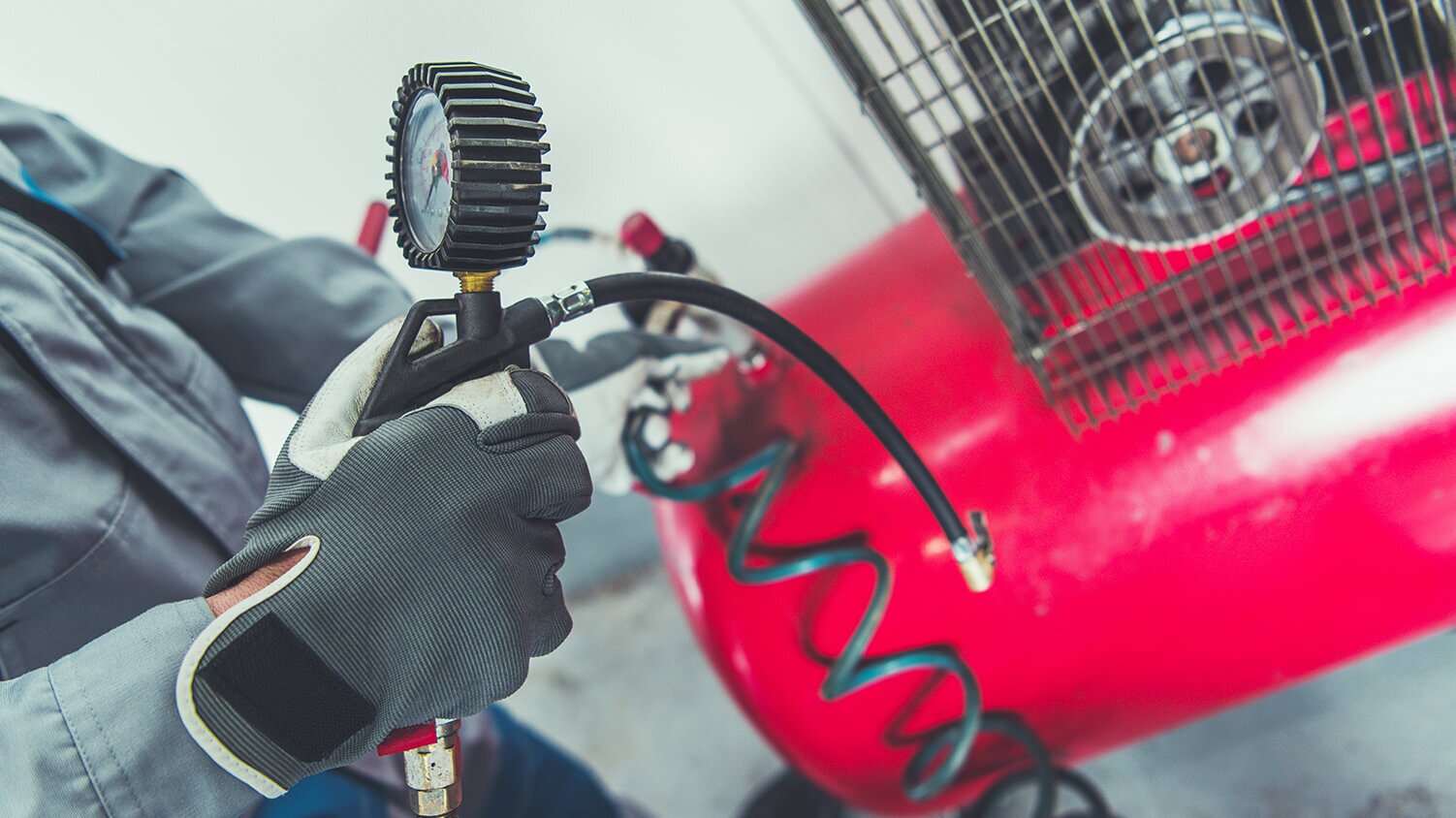
There are plenty of ways to put an air compressor to work, but choosing one that fits your business starts with knowing a few basics. Whether you’re inflating tires, running pneumatic tools, or managing industrial equipment, understanding how compressors function can help you pick one that supports your operation.
Air Compressor Types at a Glance
How Air Compressors Work
Air compressors use a motor to draw in and compress air, storing it in a tank that can withstand high pressures. Compressed air powers tools and systems across industries, from construction and maintenance to manufacturing and auto repair.
When you’re choosing an air compressor, start by identifying your specific applications. Knowing how and where you’ll use it helps narrow your options and ensures you select a model that fits your workflow.
Step 1: Determine the Air Compressor’s Location
Think about where you’ll use your compressor most often. Will it stay in one place, such as a workshop or factory floor, or move from job to job?
Stationary air compressors are ideal for shops or manufacturing spaces that rely on a steady air supply.
Portable air compressors suit mobile crews and field work.
If your team doesn’t always have access to electricity, a gasoline-, diesel-, or battery-powered compressor can help you stay productive wherever the job takes you.
Step 2: Understand Key Specifications
Every air compressor has a few critical specs that determine how it performs.
CFM (Cubic Feet per Minute): The volume of air the compressor delivers. Higher CFM supports multiple tools or larger applications.
PSI (Pounds per Square Inch): The level of air pressure. Most pneumatic tools require between 40 and 90 PSI.
Horsepower (HP): A measure of efficiency rather than strength. Two compressors delivering the same PSI and CFM, but at different horsepower ratings, will differ in energy efficiency.
Air compressors typically feature single-stage or two-stage pumps.
Single-stage pumps compress air once and are suited for light-duty applications.
Two-stage pumps compress air twice for higher pressure, making them a dependable choice for industrial or heavy-use environments.
Step 3: Review Air Compressor Parts and Maintenance
Air compressors rely on a range of components to perform safely and consistently. Understanding the types of air compressor pumps and maintaining essential parts helps extend service life and prevent downtime.
Compressor parts include:
Air filters
Belts and pulleys
Oil-lubricated components
Air receiver tank
Pressure regulators
Safety valves
Hoses and fittings
Routine maintenance, such as a compressor oil change, helps keep moving parts properly lubricated. Check your compressor pressure switch and air compressor safety valve regularly to ensure safe operating conditions. Small actions like these can make a big difference in performance and reliability.
Step 4: Explore Accessories and Add-Ons
Air compressor performance can be enhanced with the right accessories. Depending on your setup, consider filters, throttle controls, remote starts, maintenance kits, or additional tanks to streamline your workflow.
Simplify Your Air Power Needs
With a bit of planning, choosing an air compressor becomes straightforward. Whether you’re running a shop, maintaining a fleet, or powering tools on a construction site, Zoro makes it easy to find what you need, from air compressor parts to complete units.
Product Compliance and Suitability
The statements contained in this guide are intended for general informational purposes only. Such statements do not constitute a product recommendation or representation as to the appropriateness, accuracy, completeness, correctness, or currentness of the information provided. Information provided in this guide does not replace the use by you of any manufacturer instructions, technical product manual, or other professional resource or adviser available to you. Always read, understand, and follow all manufacturer instructions. Portions of this article were generated in part by ChatGPT, and edited by a member of the Zoro team.
