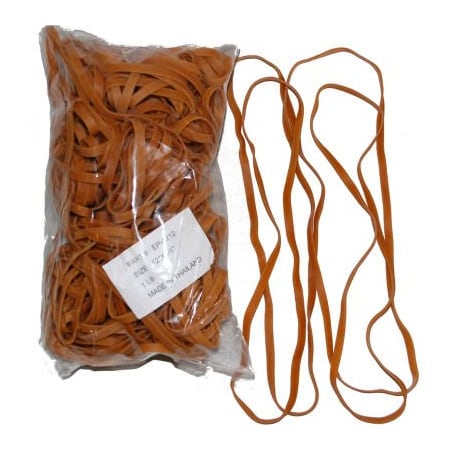
In office settings, rubber bands are used to bundle envelopes, cards and other paper sets. Rubber bands are also used to contain scrolled, rolled or tubed documents. First invented in 1845 to contain stacks of envelopes, large rubber bands and small rubber bands are also employed today as a creative solution for many problems from orthodontia to hair ties, and from to erasers to cup and handle grips. For more office staples, see our basic office supplies, paper clips, and binder clips.
Frequently Asked Questions
Synthetic rubber materials, like those made from EPDM and styrene-butadiene rubber, offer superior durability and longevity compared to natural rubber, making them ideal for long-term use.
Consider the circumference and diameter of the items you need to bind. Measure the distance around the objects or the diameter of the holes they will pass through to determine the appropriate size.
Elasticity is influenced by the type of rubber material, thickness, and manufacturing process. High-quality rubber bands with optimal thickness and proper curing techniques maintain superior elasticity and stretchiness.
Store rubber bands in airtight containers away from direct sunlight and heat sources. Additionally, consider using a humidifier in storage areas to maintain optimal moisture levels and prevent premature aging.