


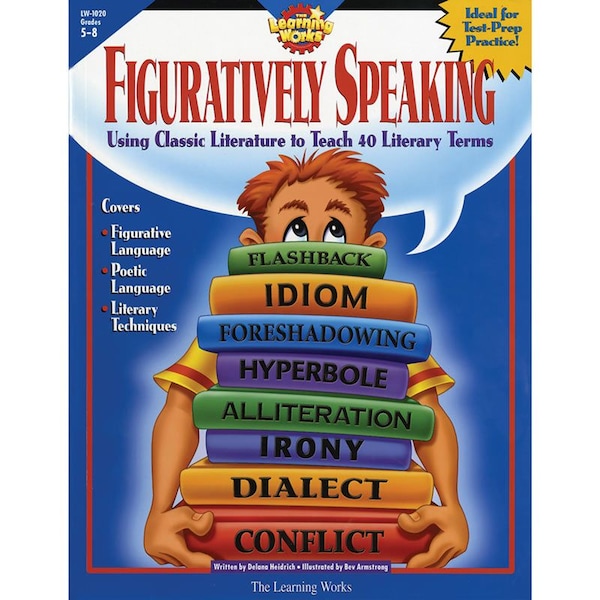
Creative Teaching Press Figuratively Speaking Book
Mfr # LW1020
Zoro # G9602328
product price: $17.99
/eaGet a 10% off coupon
Free 30-day returns
Return PolicyGet 30 days to pay with Net 30
Apply NowReal support from real people
Contact our U.S. based teamSpecifications
Product Information
MFR #
LW1020
Zoro #
G9602328
UPC #
40409010200
Country of Origin
United States
Description
Using Classic Literature to Teach 40 Literary Terms. This resource book draws on classic literature to illustrate the use of 40 basic literary terms. Divided into sections on figurative language, poetic language, and literary techniques, the book covers hyperbole, metaphor, irony, imagery, dialect, plot, alliteration, onomatopoeia, allusion, conflict, and lots more! The first page of each lesson includes a definition of the term and one or more samples from grade-appropriate classic literature. The next two pages challenge students to identify and understand the term and to use it on their own.
Figuratively Speaking takes the hit-and miss-out of teaching students literary terms and providing technique instruction . This comprehensive resource book draws on classic literature to illustrate the use and understanding of basic literary terms using three general categories: Figurative Language - denotation and connotation, hyperbole, idiom, imagery, metaphor and simile, oxymoron and paradox, personification, symbol. Poetic Language -alliteration, assonance and consonance, form, onomatopoeia, parallelism, repetition and refrain, rhyme, rhythm, run-on and end-stopped lines, stanza. Literary Technique - allusion, characters and characterization, conflict, dialect, dialogue, flashback, foreshadowing, genre, irony, local color, mood and tone, moral and theme>, narrator/point of view, plot, poetic license, pun, satire and parody and farce.
Each lesson (centered around one literary term) included a definition of the term and one of more samples from grade-appropriate classic literature, followed by activities that challenge students to identify and understand the term and use it on their own.
Figuratively Speaking takes the hit-and miss-out of teaching students literary terms and providing technique instruction . This comprehensive resource book draws on classic literature to illustrate the use and understanding of basic literary terms using three general categories: Figurative Language - denotation and connotation, hyperbole, idiom, imagery, metaphor and simile, oxymoron and paradox, personification, symbol. Poetic Language -alliteration, assonance and consonance, form, onomatopoeia, parallelism, repetition and refrain, rhyme, rhythm, run-on and end-stopped lines, stanza. Literary Technique - allusion, characters and characterization, conflict, dialect, dialogue, flashback, foreshadowing, genre, irony, local color, mood and tone, moral and theme>, narrator/point of view, plot, poetic license, pun, satire and parody and farce.
Each lesson (centered around one literary term) included a definition of the term and one of more samples from grade-appropriate classic literature, followed by activities that challenge students to identify and understand the term and use it on their own.
Ratings & Reviews
3 Reasons You Can Count On Us

Supplies for every job.
10 million items and the exact one you need.

When you need it fast, count on Zoro!
2 million products ship in 1 day.

Stretch your budget further.
Everyday low prices on the brands you love.