
Cold Water vs Hot Water Pressure Washers
Discover whether cold or hot water pressure washers fit your needs.
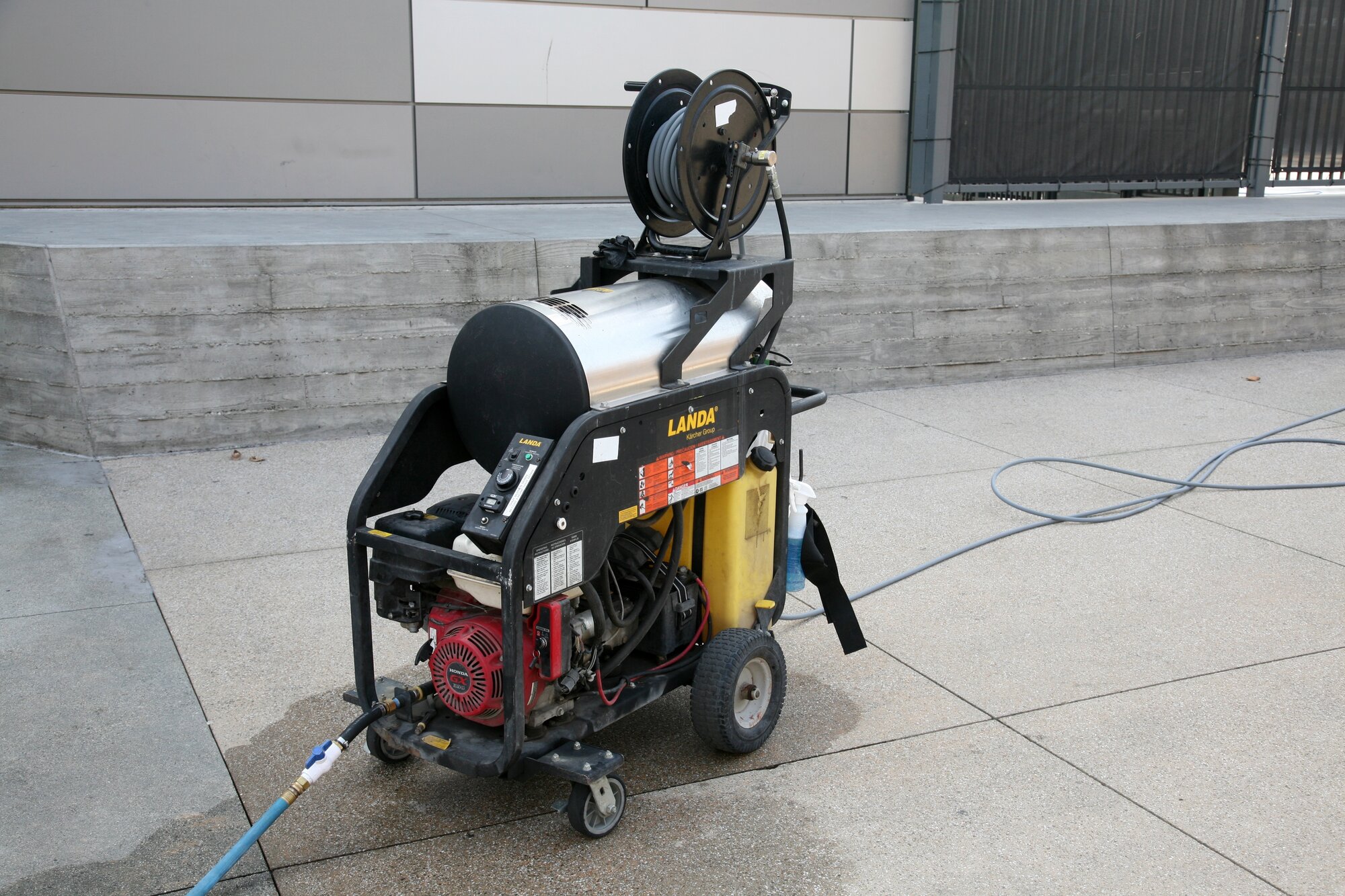
Cold Water vs. Hot Water Pressure Washers: The Ultimate Cleaning Showdown
There is an undeniable satisfaction in using a pressure washer. Watching years of accumulated grime, mold, and dirt vanish under a high-pressure stream of water is one of the most rewarding outdoor chores. However, if you are looking to purchase or rent one of these machines, you will quickly run into a fundamental crossroads: Should you use a cold water or a hot water pressure washer?
While they might look similar at a glance, these two types of equipment are engineered for entirely different battlefields. Choosing the wrong one can lead to wasted time, incomplete cleaning, or unnecessary expenses. To help you make the right choice, let’s break down the mechanics, pros, cons, and ideal applications of both systems.
The Core Difference: Science on the Surface
To understand why one machine outperforms the other in certain scenarios, we have to look at the science of cleaning. Cleaning effectively requires a combination of four elements: pressure (PSI), water flow (GPM), detergents, and temperature.
- Cold Water Pressure Washers: These machines rely strictly on mechanical force. They use a pump to pressurize water drawn from a standard tap, blasting away dirt through pure impact velocity.
- Hot Water Pressure Washers: These units contain everything a cold water washer has, plus an internal heating coil (usually powered by diesel, kerosene, or propane). The water passes through this coil, heating up to temperatures of 200 degrees or higher, occasionally producing wet steam.
Think of it like washing greasy dishes in your kitchen sink. If you try to wash a bacon-greased skillet with freezing cold water, the grease simply hardens and smears around, no matter how hard you scrub. But turn on the hot water, and the grease melts away effortlessly.
Cold Water Pressure Washers: The Portable Workhorses
Cold water pressure washers are the most common units on the market, dominating residential garages and light commercial job sites.
The Advantages
- Affordability: Cold water units are significantly less expensive to buy, rent, and maintain than their hot water counterparts because they lack complex heating systems.
- Portability and Size: Without a massive heating coil and fuel tank, cold water pressure washers are compact, lightweight, and easy to transport in the back of a truck or even a car trunk.
- Simplicity: Fewer moving parts mean fewer things can go wrong. Maintenance is generally limited to basic engine or motor care and pump oil changes.
The Limitations
The primary drawback of cold water is its inability to tackle molecular bonds found in oils, fats, and grease. While a high-PSI cold water washer can physically blast oil off a surface, it often just breaks the oil into smaller droplets and scatters it around rather than dissolving and removing it.
Best Applications
Cold water pressure washers excel at removing hard, caked-on mechanical debris and organic matter. They are ideal for:
- Stripping peeling paint or stain from wood decks and fences.
- Blasting mud, clay, and dirt off ATVs, dirt bikes, and trucks.
- Clearing algae, moss, and mildew from brick patios, concrete sidewalks, and home siding.
- General residential maintenance.
Hot Water Pressure Washers: The Industrial Heavyweights
When the job involves hydrocarbons, animal fats, or industrial grime, hot water units are absolutely essential.
The Advantages
- Unmatched Grease Cutting: Heat lowers the viscosity of oil and grease, melting them rapidly so the water pressure can flush them away.
- Faster Cleaning Times: Because heat does the heavy lifting at a molecular level, hot water washers can clean surfaces up to 50% faster than cold water units, drastically reducing labor costs.
- Less Chemical Dependency: The extreme heat sanitizes surfaces and breaks down grime naturally, meaning you can use significantly less chemical detergent.
- Sanitization: The high heat kills bacteria, viruses, and fungi, making it crucial for food-related environments.
The Limitations
The obvious trade-off is the cost and footprint. Hot water pressure washers are large, heavy, and expensive investments. They require a secondary fuel source to run the burner, and they demand strict maintenance schedules to ensure the heating coils do not scale up or malfunction.
Best Applications
Hot water units are the gold standard for heavy industries, including:
- Automotive and Aviation: Cleaning greasy engines, transmissions, and undercarriages.
- Construction and Mining: Washing heavy equipment, bulldozers, and tractors caked in grease and oil.
- Food Industry: Sanitizing commercial kitchens, food processing plants, and restaurant exhaust hoods.
- Municipalities: Removing chewing gum, graffiti, and oil stains from public parking garages and city sidewalks.
Making Your Decision: A Quick Comparison
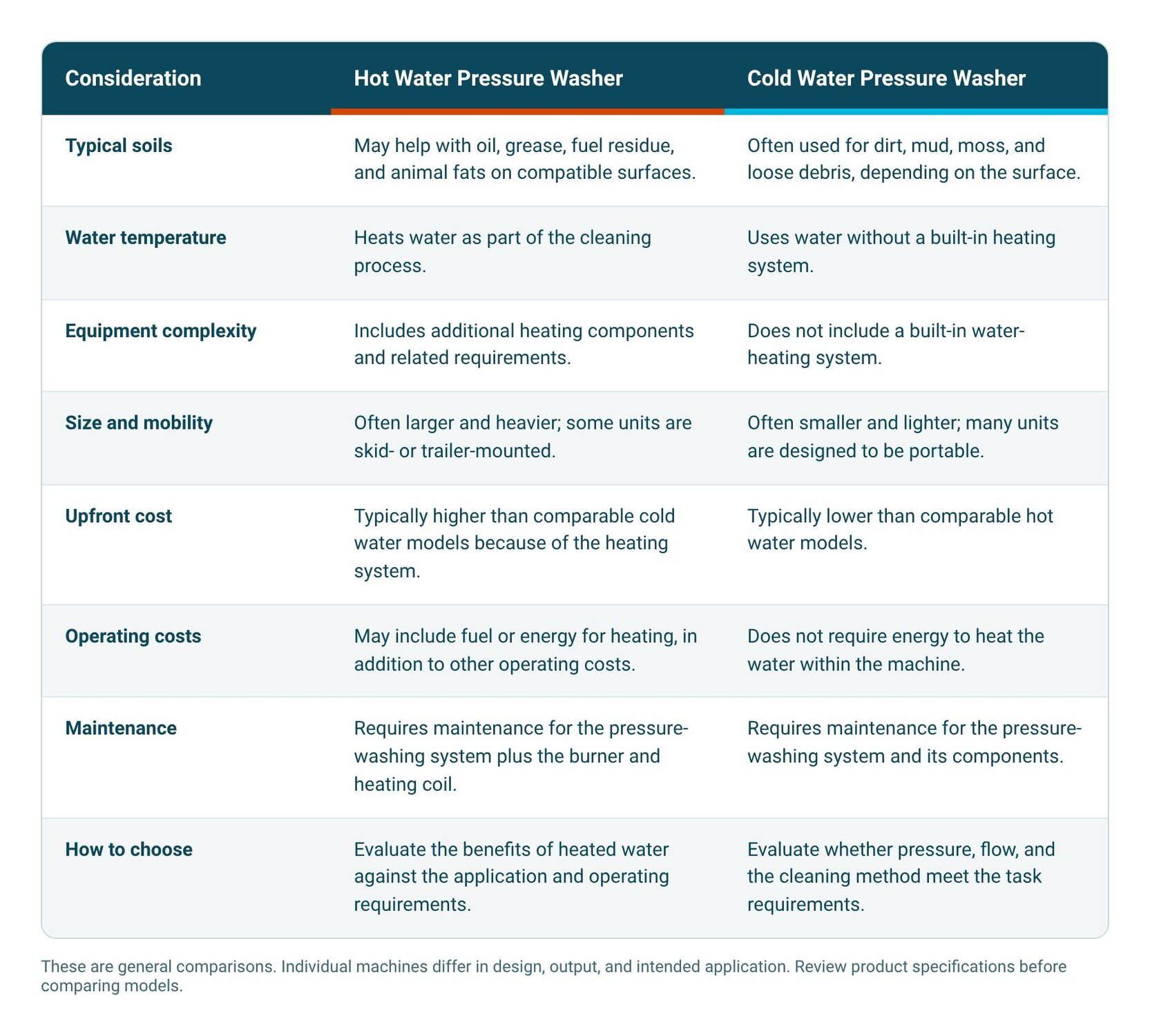
Summary: Which One Should You Choose?
The decision boils down to a simple question: What type of grime are you fighting? If your daily operations or weekend chores revolve around clearing away soil, sand, mud, or stripping old paint, a cold water pressure washer will give you all the power you need while saving you thousands of dollars.
However, if your business deals with grease, oils, lubricants, or food waste, trying to get by with a cold water unit will cost you more in wasted time, labor, and expensive chemicals than the machine is worth. In the world of industrial grime, heat isn't a luxury—it’s an absolute necessity.
Product Compliance and Suitability
The statements contained in this guide are intended for general informational purposes only. Such statements do not constitute a product recommendation or representation as to the appropriateness, accuracy, completeness, correctness, or currentness of the information provided. Information provided in this guide does not replace the use by you of any manufacturer instructions, technical product manual, or other professional resource or adviser available to you. Always read, understand, and follow all manufacturer instructions. Portions of this article were generated in part by ChatGPT.


