


How to Choose the Right Concrete Anchor for the Job
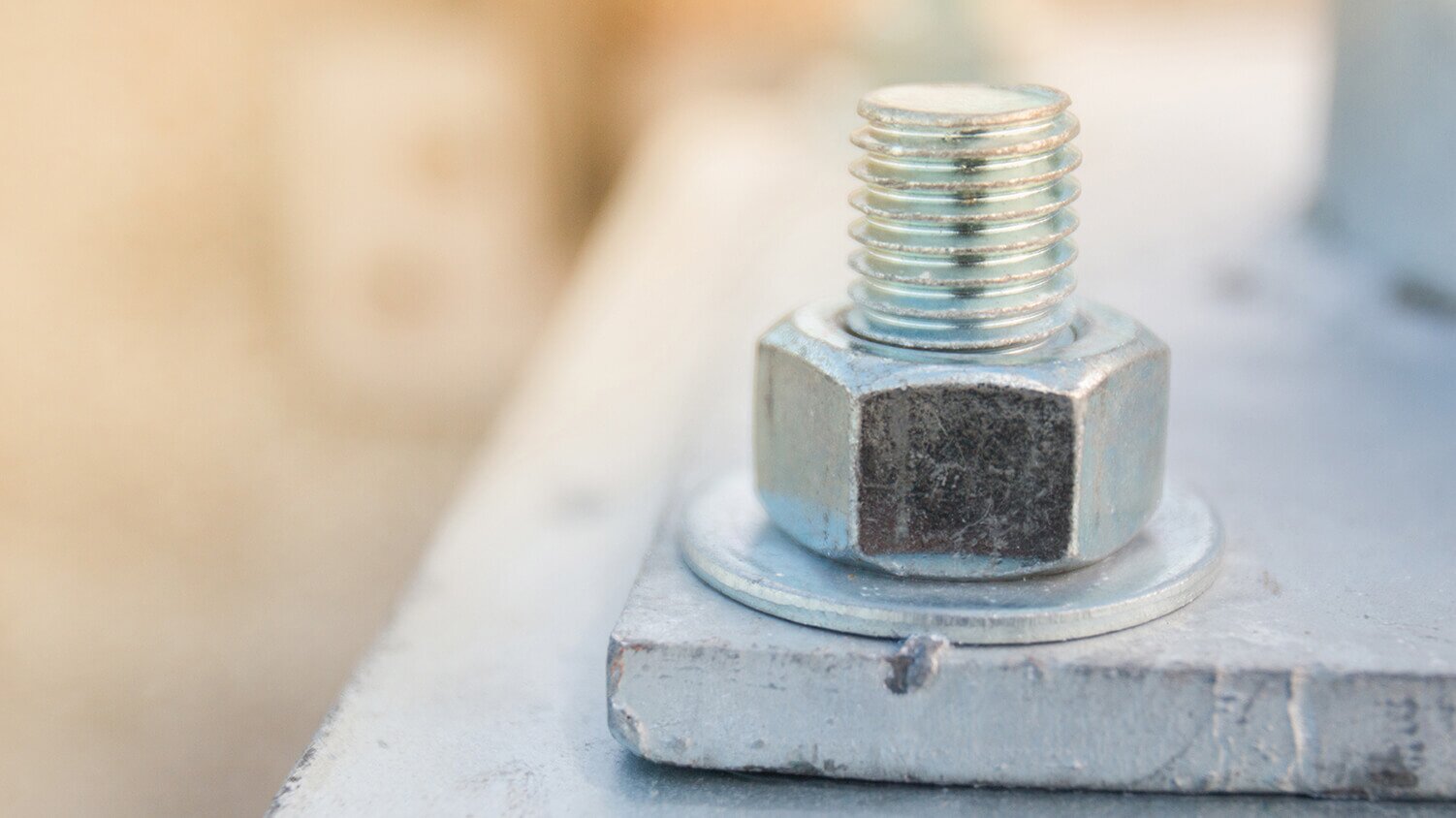
As a small business owner, providing your customers with safe, high-quality work is paramount to upholding your reputation. Selecting the right concrete anchor for your application can help ensure a positive outcome. However, knowing which concrete anchor is the right one for the job may not always be abundantly clear. This article takes you through the seven most common concrete anchors, their benefits, limitations, and their ideal applications. Let’s get to it!
Types of Concrete Anchors
1. Wedge Concrete Anchor
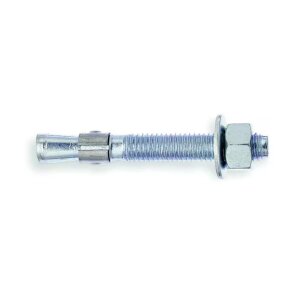
The male concrete wedge anchor is corrosion-resistant, easy to install, and among the strongest anchors. It’s designed for use in solid concrete only—not brick, block, mortar, or stone. It features a threaded stud and clip that expands against the concrete wall. Wedge anchors are ideal for heavy load or shear applications, with seismic versions available for earthquake-prone areas. Keep in mind that your drill holes should match the anchor’s diameter.
2. Drop-In Concrete Anchor
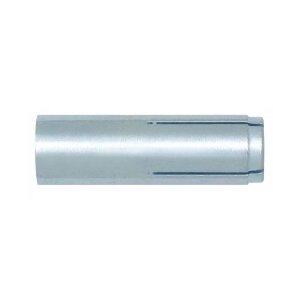
Drop-in anchors—often confused with wedge anchors—are female anchors placed in pre-drilled holes. A setting tool is used to drive the expander plug with a hammer until the anchor's lip meets the tool. Like wedge anchors, they are only for solid concrete and are not suitable for brick, block, mortar, or stone.
3. Concrete Sleeve Anchor
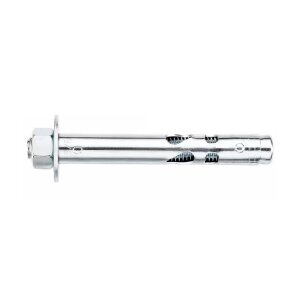
Sleeve anchors are male fasteners with a threaded bolt and expander sleeve. Inserted through a fixture into a pre-drilled hole, tightening the nut pulls the bolt, flaring the sleeve up to ⅛" for a secure hold. They work in concrete, brick, and stone.
4. Machine Screw Anchor
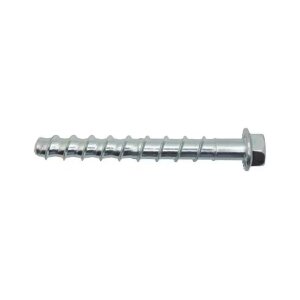
This female anchor is a cylindrical base inserted into a pre-drilled hole in concrete, brick, mortar, or stone. The anchor screw is threaded through the fixture and into the base. As the screw is tightened with a setting tool, the base expands to secure the anchor. Each machine screw anchor has a specific setting tool based on its diameter. The hole size for machine screws must be larger than the anchor size.
5. Strike Anchor (a.k.a. hammer drive, hammer set, metal hit, or hammer drive pin anchor)
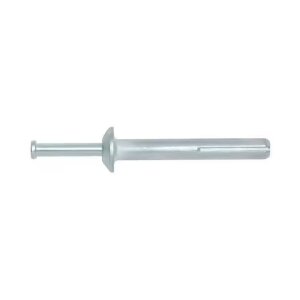
A strike anchor is a male fastener designed for lightweight fixtures such as shelf brackets and electrical boxes in solid concrete. It has a tubular body with a drive pin that expands when hammered into a pre-drilled hole, providing a secure hold. The hole diameter must match the anchor. Strike anchors offer quick installation but are usually non-removable.
6. Lag Shield Anchor
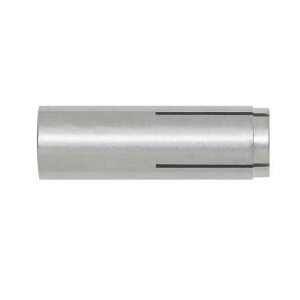
Lag shield anchors are female fasteners made of unthreaded zinc alloy, inserted into pre-drilled holes in concrete or mortar. When a lag screw enters, it expands the sleeve, creating a secure hold. Make sure the hole is the right size—too large and the shield spins, too small and the anchor crushes. Long shields provide better grip in softer materials, while shorter ones are ideal for harder materials like masonry, reducing drilling time. Keep in mind that lag shields absorb vibration because of their soft metal.
7. Split Drive Anchor
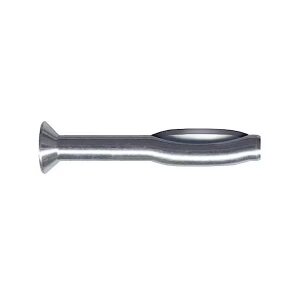
The one-piece split drive anchor, made of durable carbon steel, gains its holding power from its split, expanded base. These anchors are best for light-duty anchoring in concrete, brick, or block. When hammered into a pre-drilled hole, the base compresses and maintains pressure on the hole walls for a secure hold. During installation, make sure the hole size matches the anchor's base diameter.
Concrete Anchor Comparison Chart
V = Very suitable M = May be suitable
| Type of Material | Soilis Concrete | Hollow Concrete Block | Grout Filled Block | Brick | Mortar |
|---|---|---|---|---|---|
| Wedge Anchor | V | M | |||
| Sleeve Anchor | V | V | V | V | V |
| Drop-In Anchor | V | M | |||
| Machine Screw Anchor | M | V | M | V | V |
| Leadwood Screw Anchor | V | V | V | V | |
| Single Expansion Anchor | M | M | V | V | V |
| Double Expansion Anchor | M | M | V | V | V |
More Factors to Consider When Selecting Concrete Anchors
Rust and Corrosion
Stainless steel anchors offer the best rust resistance and should be used for submerged or wet outdoor conditions. Zinc-plated anchors are suitable for outdoor use but will eventually rust. For dry, indoor use, standard zinc-plated anchors are sufficient.
Load Requirements
Load refers to the pressure on concrete from the item being fastened, involving shear and tension. The anchor must withstand these forces. The chart below provides general load values and should be used alongside specific data from the fastener manufacturer.
Ultimate Load Values in 2,000 psi Concrete
| Size | Min. Embedment | Drill Bit | Pull-out (lbs) | Shear (lbs) |
|---|---|---|---|---|
| 1/4" | 1-1/8" | 1/4" | 877 | 1082 |
| 5/16" | 1-1/8" | 5/16" | 892 | 1156 |
| 3/8" | 1-1/2" | 3/8" | 1525 | 3238 |
| 1/2" | 2-1/4" | 1/2" | 2999 | 5564 |
| 5/8" | 2-3/4" | 5/8" | 3749 | 6198 |
| 3/4" | 3-1/4 | 3/4" | 4978 | 9378 |
| 7/8" | 3-7/8" | 7/8" | 6294 | 13687 |
| 1" | 4-1/2" | 1" | 7329 | 17712 |
| 1-1/4" | 5-1/2" | 1-1/4" | 13162 | 24206 |
Weights
Lighter objects can typically be fastened with 3/16" or 1/4" fasteners, while medium-weight items require 3/8", 1/2", or 5/8". For heavy objects, use 5/8", 3/4", or 1" fasteners.
Find All the Concrete Anchors You Need at Zoro
Now that you know which concrete anchors are right for your application, it’s time to stock up. Shop Zoro for all the concrete anchors your business needs today.
Product Compliance and Suitability
The statements contained in this guide are intended for general informational purposes only. Such statements do not constitute a product recommendation or representation as to the appropriateness, accuracy, completeness, correctness, or currentness of the information provided. Information provided in this guide does not replace the use by you of any manufacturer instructions, technical product manual, or other professional resource or adviser available to you. Always read, understand, and follow all manufacturer instructions.
