


How to Install Wire Shelving
Maximize your storage space with wire shelving: installing and customizing your wire shelving system.
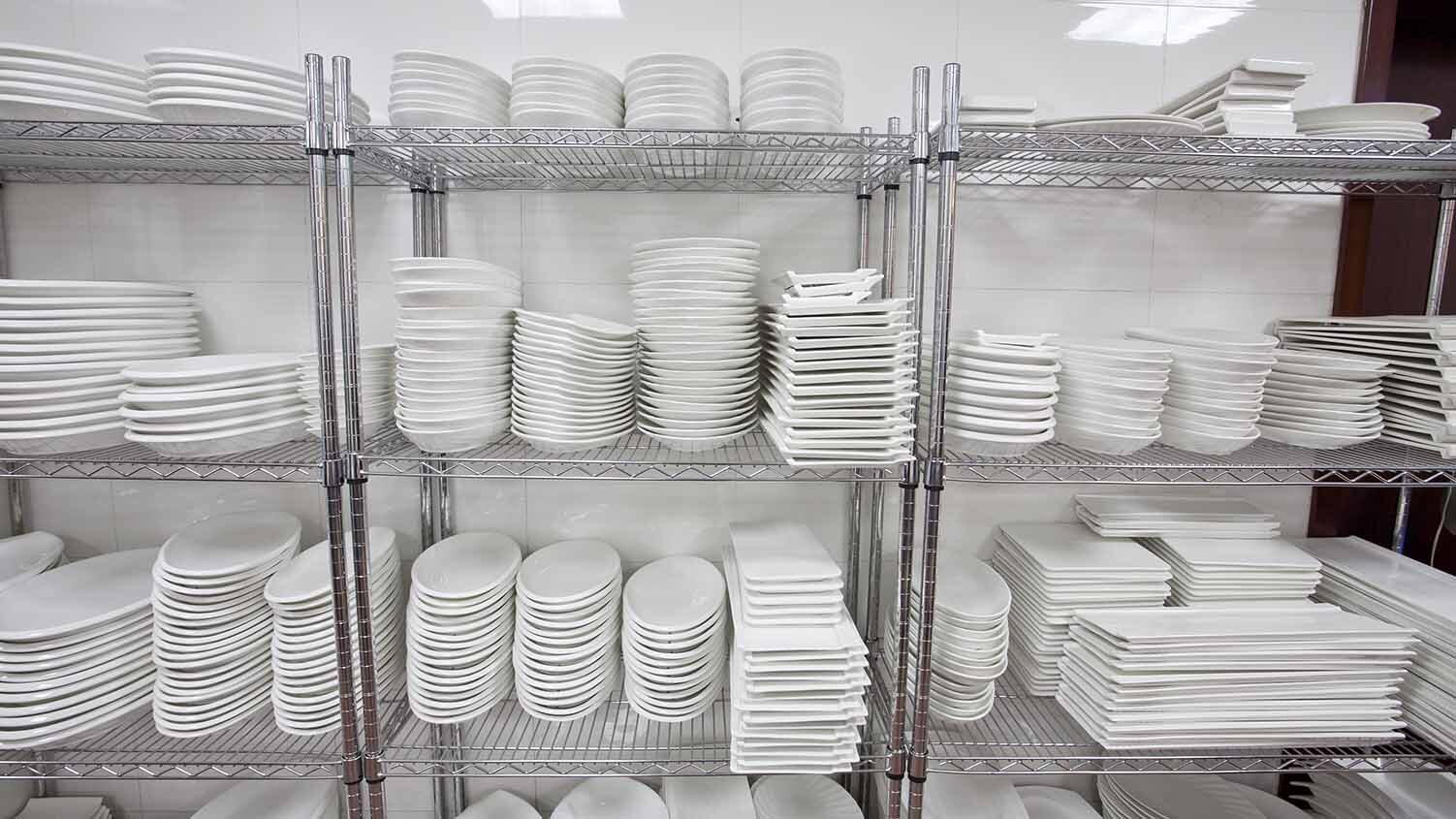
A well-organized closet, pantry, or utility room can save you time and help make daily activities such as getting ready for work, cooking, and cleaning the house much easier. One surefire way to bring more order to your home or office environment is to incorporate wire shelving. Not only is it affordable, it’s also customizable and relatively easy to install. We’ll show you how.
When working with wire shelving, your first step is to gather all of your tools and parts. Here’s what you’ll need:
| Tools | Materials* |
| Level | Screws |
| Stud Finder | Hanger Rails |
| Hammer | Upright Standards |
| Hacksaw or Bolt Cutter | |
| Drill | Wire Shelving |
| Tape Measure | Back Wall Clips |
| Screwdriver | Retaining Clips |
| Pencil | Angle Brackets |
| End Brackets | |
| Clips |
*Exact materials will be determined by the type of shelving installed.
Planning
Before purchasing your materials, it’s a good idea to confirm the wire strength needed for your specific project. Most wire shelving manufacturers offer both standard closet gauge, which is plenty strong for most household situations, and heavy gauge, which is often used in garages or when storing bulky or heavyweight items that require more support.
Next, scope out the location where your new shelving is going to be placed. Using a tape measure, determine the depth, width, and height of the space where you are putting your new wire shelves. Then, sketch out the length of each piece of shelving needed, as well as the desired height of the shelves you plan to install. Keep in mind, there are a few different options for securing the exact dimensions of wire frame shelving needed for your space. You can:
- Purchase a pre-cut section that meets your needs.
- Cut the shelving to size yourself, using a hacksaw or a bolt cutter.
- Provide the exact measurements to a hardware store or Big Box retailer and have them cut the wire frame shelves for you.
If you’re replacing an old closet system, you’ll first need to tear out the old shelves and repair the drywall. Many people also take advantage of the opportunity to give the room or closet a fresh coat of paint.
Before securing anything to the wall, you’re going to want to locate the studs, which are the boards that support the walls in homes and other structures. Studs are typically spaced 16" or 24" apart across each wall from the floor to the ceiling.
Hold an electric stud finder against the wall, and it will signal the point where an open space meets the beginning of the board (or stud) behind the wall. Anchoring into the studs is important because it provides proper support to help prevent the shelves from collapsing.
Hanging Shelves Using a Track System
Now that you know where the studs are located, use a pencil to mark exactly where the hanger rail needs to go and attach it to the studs using a drill and the provided screws. It’s wise to insert a center screw first and then use a level and a ruler to make sure it is straight before using additional screws to secure the hanger rail to the wall.
Once the hanger rail is secure, it’s time to connect the upright standards—the vertical pieces that the wire shelving pieces fit into. These are connected at the middle or bottom of the wall using the provided screws. If necessary, use a wall anchor to attach if the uprights don’t line up with the wall studs.
Once your horizontal and vertical frame pieces are in place, you can insert the provided shelf brackets into the upright standards. Then, lock the shelves onto the brackets by snapping them into place. You can add supports for clothing rods right onto the shelf, as well as secure caps over any jagged cut edges on the ends of the wire shelving.
Hanging Shelves Using Back Wall Clips
If working with back wall clips, follow the same basic steps as above. But instead of using hanger rails and standards, you’ll install a series of small individual plastic pieces (back wall clips) that the wire shelving fits into. For shelves 8' long or shorter, you’ll add a retaining clip that lies flush against the wall. Longer shelves will use multiple retaining clips. Use a drill or screwdriver to secure all of the pieces in place.
Every few feet or so, add an angle bracket to provide additional support for the wire shelving. If at all possible, drill the angle brackets into a wall stud. The back wall clips, however, do not need to be installed into wall studs.
Accessories
Both types of wire shelving installations feature plenty of opportunities for customization, which is what makes them so versatile and space-saving in so many different rooms.
Consider accessories such as drawers, baskets, and shoe shelves, which can be mixed and matched to help you make the best use of your newly organized space.
Product Compliance and Suitability
The product statements contained in this guide are intended for general informational purposes only. Such product statements do not constitute a product recommendation or representation as to the appropriateness, accuracy, completeness, correctness or currentness of the information provided. Information provided in this guide does not replace the use by you of any manufacturer instructions, technical product manual, or other professional resource or adviser available to you. Always read, understand and follow all manufacturer instructions.
