
Jet Band Saw Buying Guide
Jet band saw guide: Compare 14", 15" & 18" models for resawing & curves.
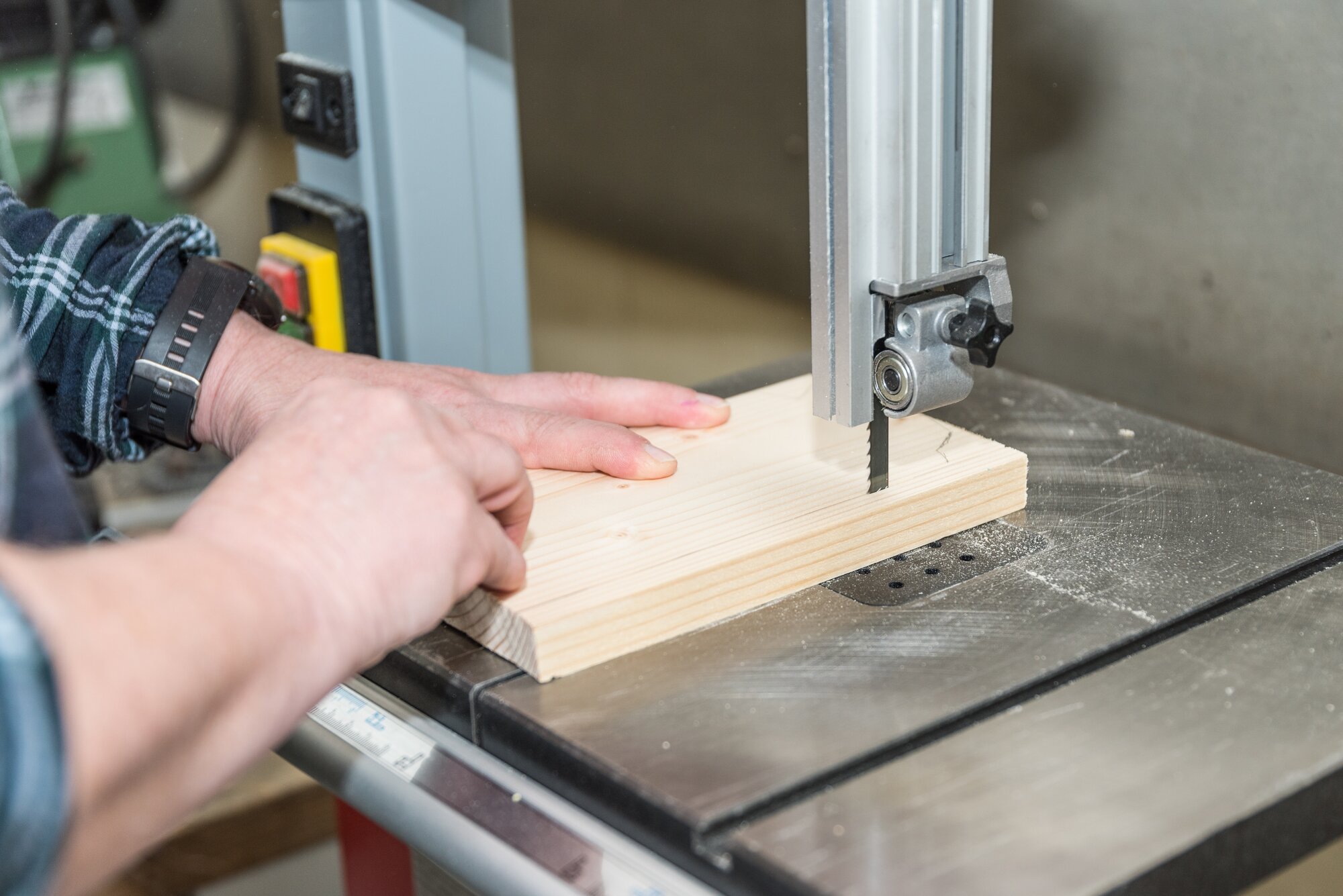
Jet Band Saw Buying Guide
Choosing the right equipment for a commercial metalworking or woodworking shop is a decision that impacts production efficiency, labor costs, and finished product quality. Among the most common names in industrial workshops is Jet, a brand known for its diverse range of band saws. When researching these machines, commercial buyers must navigate a variety of technical specifications, from throat depth and HP ratings to the nuances of hydraulic downfeeds and semi-automatic cycles.
This guide provides a comprehensive technical breakdown of Jet band saws, focusing on the features that matter most to commercial operations and comparing specific models found in current industrial inventories.
- Horizontal vs Vertical Band Saws
- Jet Band Saw Technical Comparisons
- Jet Metal Band Saws
- Jet Woodworking Band Saws
The Role of Orientation in Commercial Production
The fundamental technical choice lies between horizontal and vertical orientations. In a commercial workflow, these machines serve distinct roles.
Horizontal Band Saw Technical Profile
Horizontal saws are engineered for "cutoff" operations. The material is secured in a vise while the saw head descends through the stock. Commercial-grade horizontal units often feature hydraulic systems to control this descent rate, ensuring the blade does not "bounce" upon impact with dense materials.
- Key Spec: Rectangular vs. Round Capacity. In structural fabrication, the rectangular capacity is often more critical than the round, as it determines the maximum size of H-beams or square tubing the machine can clear.
- Control Systems: Semi-automatic cycles utilize hydraulic lifts to return the saw head to a starting position after a cut is completed, reducing operator fatigue and increasing cycles per hour.
Vertical Band Saw Technical Profile
Vertical saws are utilized for "shaping" and "contouring." Unlike horizontal units, the workpiece is moved across a fixed vertical blade.
- Key Spec: Throat Depth. This is the distance between the blade and the inner frame of the saw. It dictates the maximum width of a sheet or part that can be maneuvered for a cut.
Table Features: Commercial vertical saws frequently feature tilting tables, typically up to 45 degrees, to accommodate beveling and complex geometry in fabrication.
Jet Band Saw Technical Comparisons
Jet Metalworking Band Saws
The following table highlights Jet models designed for metalworking. These machines typically feature coolant systems and lower SFPM (Surface Feet Per Minute) ranges required for high-density alloys.
| Model Number | Type | Operation | Capacity (Round) | HP | Voltage/Phase |
|---|---|---|---|---|---|
| 414453 | Horizontal | Manual | 5 in | 0.5 HP | 115V / 1Ph |
| MBS-1018-1 | Horizontal | Semi-Auto | 10 in | 2 HP | 230V / 1Ph |
| 414476-4 | Horizontal | Semi-Auto | 12 in | 3 HP | 460V / 3Ph |
| 414472 | Horizontal | Manual | 10 in | 1.5 HP | 115/230V / 1Ph |
| 414467 | Horizontal | Semi-Auto | 8 3/4 in | 1.5 HP | 230V / 3Ph |
| 414450 | Horizontal | Manual | 9 in | 1.5 HP | 115/230V / 1Ph |
| 414479 | Horizontal | Semi-Auto | 10 in | 2 HP | 230V / 1Ph |
| ECB-1422V | Horizontal | Semi-Auto | 14 1/8 in | 5 HP | 230/460V / 3Ph |
| 414504C | Vertical | Manual | 12 in (Throat) | 1 HP | 230/460V / 3Ph |
| HVBS-56V | Combination | Manual | 5 in | 0.5 HP | 115V / 1Ph |
Jet Woodworking Band Saws
| Model Number | Type | Operation | Capacity (Throat) | Voltage |
|---|---|---|---|---|
| JWBS-20-3 | Vertical | Manual | 20 in | 230V AC |
| JWBS-20-5 | Vertical | Manual | 20 in | 230V AC |
| JT1-1376 | Vertical | Manual | 18 in | 110V |
| JWBS-15 | Vertical | Manual | 14 1/8 in | 115/230V AC |
| JWBS-15-3 | Vertical | Manual | 14 1/8 in | 230V AC |
| 708115K | Vertical | Manual | 13 1/2 in | 115/230V AC |
| JT1-1375 | Vertical | Manual | 12 in | 110V |
Critical Technical Parameters for Industrial Selection
1. Power Requirements: Voltage and Phase
Before procurement, a facility must verify its electrical infrastructure.
- Single-Phase (1Ph): These are common in light industrial settings and maintenance toolrooms. Models such as the 414466 are designed for 115V or 230V single-phase power.
- Three-Phase (3Ph): Standard in heavy manufacturing, three-phase motors provide higher starting torque and greater efficiency for continuous duty cycles. The 414476-4 is a 460V three-phase machine capable of handling sustained industrial loads.
2. Surface Feet Per Minute (SFPM) and Drive Systems
The speed at which the blade travels, measured in SFPM, must be matched to the material's density and hardness.
- Variable Speed Drives: Modern industrial saws often use electronic inverters to allow the operator to dial in a precise speed without stopping the machine. This is essential for shops cutting a variety of materials from aluminum to stainless steel.
- Multi-Speed Pulleys: Traditional designs use a step-pulley system. While effective, these require manual belt adjustments to change speeds, which can lead to downtime in a high-variability production environment.
3. Blade Support and Tensioning
In a production environment, lateral deflection of the blade (blade "walk") results in wasted material and out-of-square cuts.
- Blade Guides: Carbide guides are the industrial standard for metalworking due to their heat resistance and stability. Roller bearing guides are more common in woodworking applications where heat buildup is less of a concern.
- Hydraulic Tensioning: Maintaining a consistent tension on Jet band saw blades is necessary for accuracy. Hydraulic tensioning systems provide a measurable and repeatable way to ensure the blade is tightened to the manufacturer's specification.
4. Mitering and Material Handling
If a production process requires angled cuts, the method of mitering impacts the shop's floor plan.
- Swivel Head Design: The entire saw head swivels to the desired angle while the material remains stationary and parallel to the machine. This is ideal for long stock in narrow floor spaces.
- Swivel Vise Design: The vise rotates the material to the angle. This requires a larger clear area around the machine to accommodate the "swing" of long bars or pipes.
Maintenance and Consumables
An industrial band saw is a significant capital investment that requires a maintenance schedule to ensure uptime. Search trends for Jet band saw parts highlight the importance of component availability for commercial users.
- Blade Selection: The performance of any saw is limited by the quality of the Jet band saw blades installed. Buyers must select the correct Teeth Per Inch (TPI) for their material thickness—typically aiming for at least three teeth in the cut at all times.
- Chip Management: Integrated chip brushes are a critical feature. These brushes clear metal chips from the teeth of the blade before they re-enter the cut, preventing tooth breakage and ensuring a cleaner finish.
- Recirculating Coolant: For metalworking machines like the ECB-1422V, the coolant system must be maintained to avoid bacterial growth and to ensure optimal heat dissipation during long production runs.
Evaluating Jet band saws for commercial use involves balancing the machine's physical capacity with its operational efficiency. For high-volume cutoff tasks, the semi-automatic horizontal units provide the necessary automation to minimize labor. For custom fabrication and contouring, the throat depth and resaw capacity of vertical units are the primary considerations. By matching the motor phase, drive system, and orientation to the specific workflow, industrial buyers can select a machine that meets the rigorous demands of a production environment. For any machine, the long-term reliability is supported by a consistent supply of Jet band saw parts and appropriate blade selection for the intended material application.
Product Compliance and Suitability
The product statements contained in this guide are intended for general informational purposes only. Such product statements do not constitute a product recommendation or representation as to the appropriateness, accuracy, completeness, correctness, or currentness of the information provided. Information provided in this guide does not replace the use by you of any manufacturer instructions, technical product manual, or other professional resource or adviser available to you. Always read, understand, and follow all manufacturer instructions.
