
Multi-Gas Detector Buying Guide: How to Choose a Portable Gas Detector
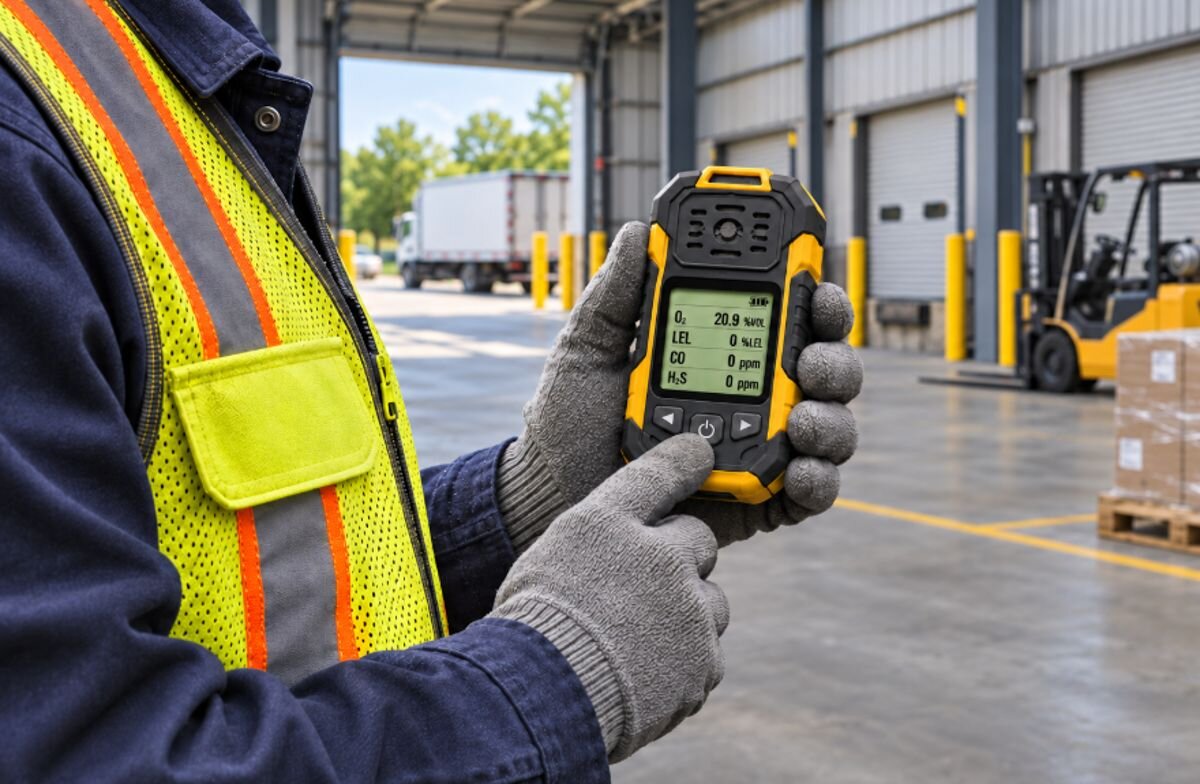
Table of Contents
- What Is a Multi-Gas Detector?
- Gas Detector Types: Single-Gas, 4-Gas and 5-Gas Monitors
- What Is a 5-Gas Monitor?
- Why Gas Detection Matters
- Common Gas Detection Sensors
- How to Choose a Portable Gas Detector: 9 Steps
- Multi-Gas Detector Features Comparison
- Using Multi-Gas Detectors for Confined-Space Work
- Portable Gas Detector Buying Checklist
- Frequently Asked Questions
- Find a Multi-Gas Detector for Your Workplace
A portable multi-gas detector helps your team spot hazardous air conditions by monitoring selected gases in the work area. You'll find these instruments in manufacturing plants, utilities, wastewater operations, maintenance shops and anywhere oxygen levels, combustible gases or toxic gases may be a concern.
Picking a multi-gas detector isn't just about counting sensors. The setup depends on what your hazard assessment finds: which gases might be present, the ranges you need to measure, where the detector will be used and how your team responds when it alarms.
This guide walks through the main gas detector types, the features worth comparing and a checklist for gas detector selection. Keep in mind that a detector is one part of a broader safety program. It doesn't replace hazard assessment, training, ventilation, protective equipment or your entry and emergency procedures.
Key takeaways
- Start gas detector selection with a documented hazard assessment, not a spec sheet.
- The exact sensor list matters more than the number of gases on the label.
- Common gas detector types include single-gas, 4-gas and 5-gas monitors, in diffusion or pumped designs.
- Bump testing and calibration are different checks, and a detector program typically needs both.
- Budget for the rest of your gas detection equipment: calibration gas, sampling accessories and replacement sensors.
What Is a Multi-Gas Detector?
A multi-gas detector is a monitoring instrument that checks for more than one gas or atmospheric hazard at the same time. Most portable models use a dedicated sensor for each gas, though some combine two gases in one sensor, and the gases monitored depend on the sensors installed.
Typical applications include:
- Detecting oxygen-deficient or oxygen-enriched atmospheres
- Monitoring combustible gases and vapors
- Detecting selected toxic gases, such as carbon monoxide or hydrogen sulfide
- Checking the air during maintenance or inspection tasks
- Supporting atmospheric monitoring for confined-space work
- Monitoring areas where your assessment identifies a potential gas exposure hazard
Not every multi-gas detector monitors the same gases. A 4-gas instrument is often set up for oxygen, combustible gases, carbon monoxide and hydrogen sulfide, but configurations vary by model. Check the actual sensor list, because the number of channels alone doesn't tell you whether a device fits your hazards.
Gas Detector Types: Single-Gas, 4-Gas and 5-Gas Monitors
The main gas detector types are sorted by how many gases they monitor, how they sample the air and whether a person wears them or they're set up in an area. Which type fits depends on the hazards your assessment identifies.
| Type | What it typically monitors | Typical applications |
| Single-gas detector | One target gas, such as carbon monoxide, hydrogen sulfide or oxygen | Tasks with one known gas hazard |
| 4-gas detector | Often oxygen, combustible gases (%LEL), carbon monoxide and hydrogen sulfide | General industrial monitoring and many confined-space programs |
| 5-gas monitor | The four common sensors plus one more, such as a specific toxic gas or a PID for volatile organic compounds | Sites where the assessment identifies an additional hazard |
| 6-gas and higher | Additional sensors selected for specialized hazards | Complex processes with several possible gases |
| Area or transportable monitor | Selected gases across a work zone rather than one person's breathing zone | Perimeter monitoring, shutdowns, turnarounds |
Detectors also differ in how air reaches the sensors. Diffusion models let air flow in naturally, while pumped models pull a sample through a hose or probe. You'll find more on that choice in step 5 below.
What Is a 5-Gas Monitor?
A 5-gas monitor usually adds one sensor to the common 4-gas setup. Depending on the model, that fifth sensor might detect a specific toxic gas, such as sulfur dioxide, nitrogen dioxide, ammonia or chlorine. It might also be a photoionization detector (PID) for volatile organic compounds or an infrared sensor for carbon dioxide.
Which fifth sensor makes sense depends on what your hazard assessment turns up. Supported sensor options vary by manufacturer and model, so check the product documentation before you buy.
Why Gas Detection Matters
You can't count on your senses to warn you about every hazardous gas. A portable gas detector gives trained workers information they can act on under your site's procedures. Depending on the model, it may alert with audible, visual and vibration alarms when readings reach configured thresholds.
No portable detector can identify every possible hazard, though. What it detects depends on its installed sensors, detection ranges, condition, calibration, sampling method and environmental limits. That's why gas detector selection starts with a documented hazard assessment rather than an assumption that a standard setup will cover your workplace.
Common Gas Detection Sensors
Most multi-gas detectors combine three kinds of monitoring: oxygen, combustible gases and selected toxic gases. Here's what to look at for each.
Oxygen Monitoring
Oxygen sensors measure how much oxygen is in the air. Both too little and too much can be a problem. Oxygen can be displaced by another gas or used up by a process, and enriched oxygen can increase fire risk. When comparing detectors, check the oxygen sensor's measurement range, stated accuracy, response time, environmental limits and maintenance needs. Alarm settings and sensor technology vary by model, and your alarm thresholds and response steps come from your workplace program and applicable regulations.
Combustible Gas Monitoring
Combustible gas sensors help identify when flammable gases or vapors may be present. Many detectors show results as a percentage of the lower explosive limit (%LEL).
OSHA defines the lower explosive limit as "the minimum concentration of vapor in air below which propagation of a flame does not occur in the presence of an ignition source" (OSHA 29 CFR 1915.11). A %LEL reading shows how the measured concentration compares with that threshold.
Sensor response can vary by gas and technology. A detector calibrated for one gas may not respond the same way to others, so confirm it suits the substances on your site and check whether the manufacturer lists correction factors.
Toxic Gas Monitoring
Toxic gas sensors measure selected substances that can harm workers at certain concentrations. Carbon monoxide and hydrogen sulfide are common in industrial settings, but your site may need different sensors.
Choose sensors based on the chemical hazards your assessment identifies. Review each sensor's detection range, resolution, alarm setup, cross-sensitivity information, expected service life and environmental limits.
A sensor designed for one toxic gas isn't a reliable way to detect another. If several toxic gases are possible, confirm whether one instrument can cover them all or whether you'll need additional equipment and controls.
How to Choose a Portable Gas Detector: 9 Steps
Gas detector selection comes down to matching the instrument to your documented hazards, then making sure you can keep it working. These nine steps cover what to compare.
1. Start With a Workplace Hazard Assessment
Identify which gases may be present, when exposure could happen and what monitoring your procedures call for. Look beyond normal operations to maintenance, equipment failures, cleaning, process changes and nonroutine work.
Document the substances, likely sources, expected concentration ranges, required alarm actions and applicable regulations. Bring in qualified safety personnel, and review safety data sheets, process documentation and manufacturer information. The result should spell out exactly which gases and measurement capabilities you need.
2. Confirm the Sensor Configuration
Some detectors come in fixed configurations, while others let you choose or swap certain sensors within the manufacturer's supported options. Check:
- Which gases the detector can monitor at the same time
- Which sensors come with the model you're considering
- Whether optional or replacement sensors are available and compatible
- Whether the sensors cover every hazard your assessment identified
- Whether the manufacturer documents limitations or cross-sensitivities relevant to your application
A product labeled "multi-gas" may not include the sensors you need. The exact sensor list matters more than the label.
3. Compare Sensor Technology
Different sensor technologies suit different gases and conditions. Common types include:
- Electrochemical sensors: commonly used for oxygen and selected toxic gases. Performance, service life and limits vary by sensor and target gas.
- Catalytic-bead sensors: used in many combustible gas detectors. Environmental conditions and certain substances can affect their performance, so follow the manufacturer's guidance on limitations.
- Infrared (IR) sensors: used for certain gases, including some combustible gases. They don't detect every gas type, so check the target gas, range and documented limits.
- Photoionization detectors (PIDs): used for many volatile organic compounds. Response varies by compound, so check the manufacturer's documentation.
No single sensor technology fits every application. Choose based on your gases, conditions, performance needs and the manufacturer's documented capabilities.
4. Review Measurement Range and Alarm Settings
Each sensor has a defined measurement range and performance specs. Make sure the instrument can measure the concentrations that matter on your site and that the display gives your team useful information.
Alarm thresholds should come from your safety program and applicable requirements. Avoid copying them from an unrelated application or adjusting them to cut down on nuisance alarms. Available alarm types, such as low, high, time-weighted average (TWA) and short-term exposure limit (STEL) alarms, vary by model and sensor.
5. Choose Diffusion or Pumped Sampling
- Diffusion detectors let air reach the sensors through openings in the instrument. They're commonly used for personal monitoring when the worker's breathing zone matches the detector's design.
- Pumped detectors draw a sample through a probe, hose or other approved accessory. That supports remote sampling or pre-entry testing when the detector and your procedure are designed for it.
Pumped sampling brings extra considerations: hose length, the time it takes a sample to reach the sensors, leak checks, water and particulate management, filter upkeep and the manufacturer's accessory requirements. A pump doesn't automatically make an instrument right for every confined-space procedure, so follow your testing sequence and the equipment instructions.
6. Check Alarms and Usability
Alarms have to be noticeable where the detector will be used. Most combine audible, visual and vibration alerts.
Think about whether workers wear hearing protection, run loud equipment, work in low light or wear gloves. Check display readability, button layout, menus and how clearly readings show up. Also confirm what the instrument shows for faults, low battery, sensor problems and calibration status.
7. Check Battery Life and Charging
The detector has to last through your shift, task or monitoring period. Review the manufacturer's rated runtime and the conditions it was measured under. Sensor setup, pump use, alarms, wireless features, temperature and battery age can all affect runtime.
If several people share detectors or you monitor continuously, plan for charging, inspection, storage and backups.
8. Match Durability to the Work Environment
Portable detectors often face dust, moisture, drops, temperature swings and frequent handling. Review the instrument's ingress protection (IP) rating, operating temperature range and any hazardous-location certifications your site requires.
Not every portable detector is approved for potentially explosive atmospheres. Confirm the exact certification, gas group and temperature class for the specific model and configuration, and check them against your site's requirements.
9. Plan for Calibration, Bump Testing and Maintenance
Calibration and bump testing do different jobs. According to OSHA, a bump test (or function check) is a qualitative check that confirms gas reaches the sensors and the alarms work, but it doesn't measure accuracy. A full calibration adjusts the instrument's reading to match a known concentration of test gas (OSHA SHIB 09-30-2013). One doesn't replace the other.
Follow the manufacturer's instructions and your written gas detection program for test frequency, calibration, maintenance and removal from service. Intervals can differ by instrument, sensor, environment and applicable requirements.
Before you buy, compare the availability and cost of the supporting gas detection equipment: compatible calibration gas, regulators, tubing, docking stations, replacement sensors, filters and service support.
Multi-Gas Detector Features Comparison
Use this table to compare models side by side once you know which gases you need to monitor.
| Feature | Why it matters | What to verify |
| Sensor configuration | Determines which hazards the detector can monitor | Exact installed sensors and fit with your hazard assessment |
| Measurement range | Defines the concentrations the instrument can read | Range, resolution, accuracy and documented limitations |
| Sampling method | Affects how air reaches the sensors | Diffusion or pump, compatible accessories and procedure needs |
| Alarm functions | Alerts workers to configured conditions or faults | Audible, visual and vibration alerts; supported alarm types |
| Battery performance | Affects readiness and monitoring time | Rated runtime, charging method and battery replacement |
| Environmental rating | Determines fit for your work environment | IP rating, operating limits and required certifications |
| Calibration support | Helps maintain measurement performance | Calibration process, test gas, accessories, service and records |
| Data and connectivity | May support records or fleet management | Software, data export, wireless features and licensing |
Using Multi-Gas Detectors for Confined-Space Work
A portable gas detector is often part of the equipment for confined-space work, but it doesn't make an entry safe on its own. Employers determine which confined-space requirements apply and set procedures for the specific space and task. Those may cover atmospheric testing, ventilation, entry authorization, communication, attendant duties, retrieval and emergency response.
Testing order matters. For permit-required confined spaces in general industry, OSHA states: "When testing for atmospheric hazards, test first for oxygen, then for combustible gases and vapors, and then for toxic gases and vapors" (OSHA 29 CFR 1910.146). OSHA's Appendix B explains the reasoning behind that sequence (OSHA 1910.146 App B).
A few other points to plan for:
- Trained personnel: Atmospheric testing should be done by trained people using equipment suited to the identified hazards.
- Remote sampling: Allow time for the sample to reach the sensors and for readings to settle. Follow the manufacturer's instructions rather than assuming a hose length or sampling interval works everywhere.
- Alarm response: Workers need to know what each alarm means and what to do. If the detector alarms, malfunctions or shows an unexpected reading, follow your established procedure. A quiet alarm or a normal follow-up reading isn't a reason to continue before the required assessment is complete.
Because confined-space hazards can be life-threatening, have qualified safety personnel review your detector, accessories, testing process and emergency procedures before you put them into use.
Portable Gas Detector Buying Checklist
Use this checklist to keep your gas detector selection on track from assessment to purchase.
- Complete or review your workplace atmospheric hazard assessment
- List each gas that needs to be monitored
- Confirm the exact sensor configuration and measurement ranges
- Review accuracy, resolution, response time and cross-sensitivity information
- Decide between diffusion and pumped sampling
- Check alarm types, thresholds, display readability and fault indicators
- Check battery runtime, charging and readiness needs
- Confirm environmental ratings and hazardous-location certifications
- Review calibration, bump testing, maintenance and service requirements
- Identify compatible gas detection equipment: test gas, regulators, probes and tubing
- Confirm training and documentation requirements
- Get a qualified safety review for high-risk applications, including confined-space work
Frequently Asked Questions
What does a portable multi-gas detector measure?
It measures the gases its installed sensors are designed for. Common setups monitor oxygen, combustible gases and specific toxic gases such as carbon monoxide and hydrogen sulfide. Check the exact sensor list before you buy.
What are the main gas detector types?
Common gas detector types include single-gas detectors, 4-gas detectors, 5-gas monitors and higher-count multi-gas detectors. They also differ by sampling method (diffusion or pumped) and by use (personal or area monitoring).
What is a 4-gas detector?
A 4-gas detector monitors four gases or atmospheric conditions. A common setup covers oxygen, combustible gases, carbon monoxide and hydrogen sulfide, but configurations vary by model.
What is a 5-gas monitor?
A 5-gas monitor typically adds one sensor to the common 4-gas setup. That fifth sensor may detect a specific toxic gas, volatile organic compounds or carbon dioxide, depending on the model and what your hazard assessment identifies.
Single-gas or multi-gas detector: which do I need?
It depends on your hazard assessment. A single-gas detector may suit a task with one known gas hazard, while a multi-gas detector may suit work where several gases are possible.
What is the difference between a bump test and calibration?
According to OSHA, a bump test is a qualitative check that confirms gas reaches the sensors and the alarms work. A full calibration adjusts the instrument's reading to match a known concentration of test gas (OSHA). One doesn't replace the other.
Should I buy a pumped or diffusion detector?
Choose based on the monitoring task and your procedures. Diffusion models let air reach the sensors naturally, while pumped models draw a sample through tubing or a probe. Confirm the design supports how you plan to use it.
Can one multi-gas detector identify every hazardous gas?
No. A detector can only monitor the gases its sensors and design support. Your hazard assessment determines which instruments and controls you need.
How often should a gas detector be calibrated?
Follow the manufacturer's instructions, your gas detection program and applicable requirements. The right schedule depends on the instrument, sensors, conditions of use and your procedures.
What gas detection equipment do I need besides the detector?
Typical gas detection equipment includes compatible calibration gas, regulators, tubing, sampling probes, filters, replacement sensors and, for larger fleets, docking stations. Check the manufacturer's list of compatible accessories.
Find a Multi-Gas Detector for Your Workplace
A portable gas detector is the one set up for the hazards your assessment identified, backed by a solid program for training, bump testing, calibration, maintenance and alarm response.
Compare sensor configuration, measurement performance, sampling method, alarms, battery life and environmental approvals before you buy. When you're ready, browse Zoro's gas detectors, calibration gas and accessories, and confined-space equipment to find instruments and compatible gas detection equipment.
AI Product Compliance and Suitability
The statements contained in this guide are intended for general informational purposes only. Such statements do not constitute a product recommendation or representation as to the appropriateness, accuracy, completeness, correctness, or currentness of the information provided. Information provided in this guide does not replace the use by you of any manufacturer instructions, technical product manual, or other professional resource or adviser available to you. Always read, understand, and follow all manufacturer instructions. Portions of this article were generated in part by ChatGPT.
