
RIDGID Pipe Threader Buying Guide 2026
RIDGID threader guide: Compare 300, 535 & handheld power drive specs.
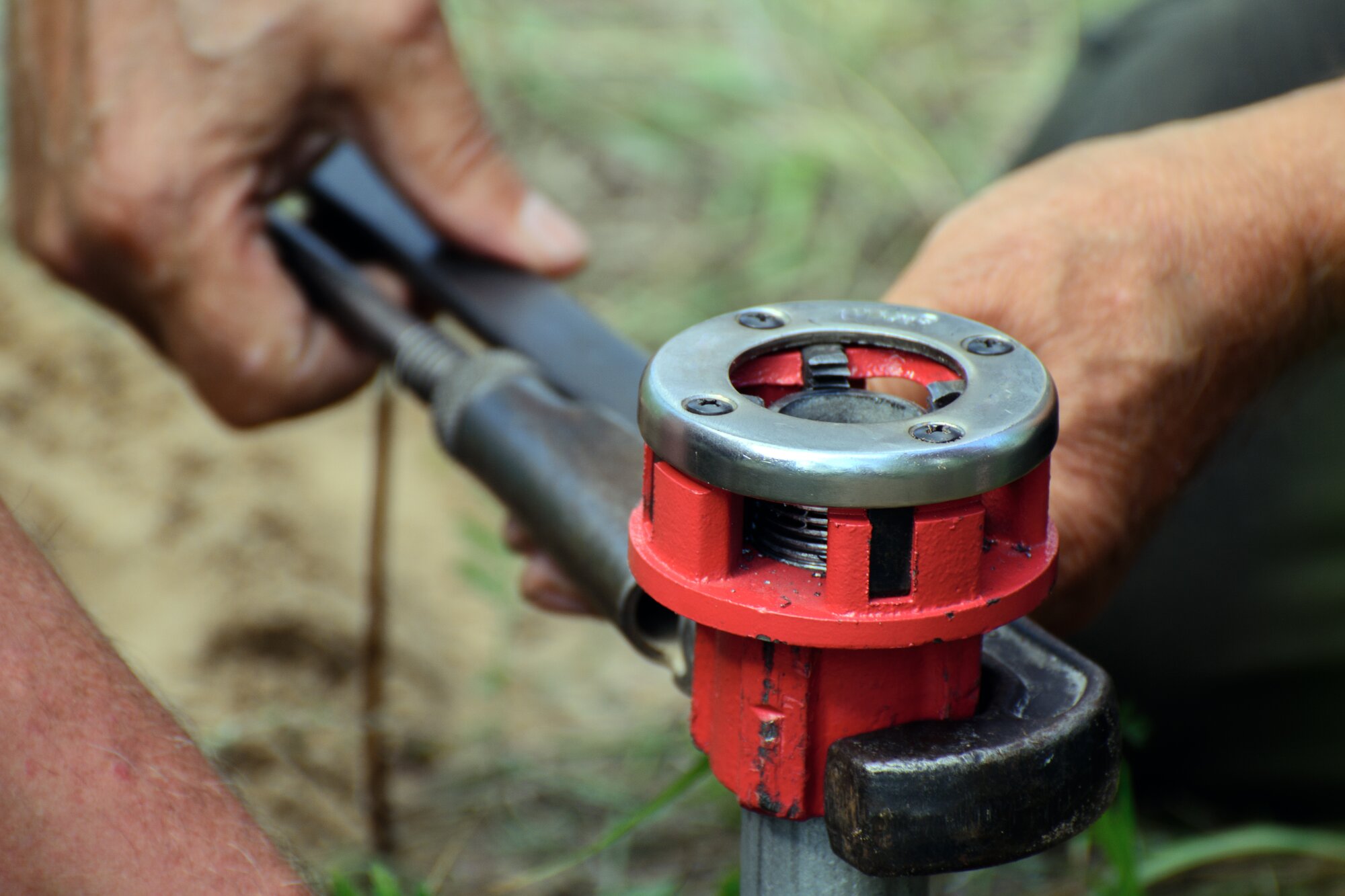
RIDGID Pipe Threader Guide: Selection and Application
In the fields of mechanical contracting, industrial maintenance, and fire protection, the integrity of a piped system is fundamentally dependent on the quality of its connections. While modern joining methods like press-fitting and grooving have gained popularity, threading remains a standard for high-pressure, high-temperature, and hazardous material conveyance. Choosing the correct threading equipment is a technical decision that balances portability, production volume, and material specifications.
This guide provides a technical overview of the RIDGID threading ecosystem, differentiating between hand-held power drives, portable machines, and stationary industrial workstations.
- Fundamentals of Mechanical Threading
- Hand-Held Power Drives: Portability and Repair
- The 300 Series: The Universal Power Drive
- Compact Threading Machines: High-Production Footprint
- Stationary Machines: The 535 Series
- Large Capacity & Specialized Prep
Shop Zoro Products

Fundamentals of Mechanical Threading
Before selecting a machine, it is essential to understand the technical requirements of the thread itself. Most industrial piping in North America utilizes NPT (National Pipe Taper) standards. The taper (1/16 inch per inch of length) creates a mechanical seal by compressing the threads against one another, usually supplemented by a thread sealant or PTFE tape.
The threading process involves three critical stages:
- Cutting: Squaring the pipe end to ensure a clean start.
- Reaming: Removing the internal burr created by the cutter to maintain flow characteristics and prevent debris from entering the system.
- Threading: Using a die head to cut the external grooves.
1. Hand-Held Power Drives: Portability and Repair
For repair and maintenance (MRO) or installations in confined spaces where a bench-mounted machine cannot reach, hand-held power drives are a primary solution. These tools are high-torque, low-speed motors designed to drive manual die heads.
- Model 600-I: This is a lightweight portable drive, optimized for pipe up to 1-1/4 inches. It is often used for residential gas lines or small-diameter electrical conduits. The RIDGID 600-I Hand-Held Power Drive (44913) provides a compact option for service vans.
- Model 690-I: A higher-capacity portable unit, the 690-I handles up to 2-inch pipe. It features a paddle-switch and a lightweight housing. The Model 690-I (44928) allows for 2-inch capacity in a handheld format.
- Model 700 Power Drive: Recognized as a heavy-duty standard for hand-held drives, it is capable of threading up to 2-inch pipe. When paired with geared threaders, it can drive dies for up to 6-inch pipe. The RIDGID Model 700 (41935) is designed for harsh environments and features a double-ended motor design.
2. The 300 Series: The Universal Power Drive
The RIDGID 300 Power Drive is a modular system. It consists of a heavy-duty motor and a "hammer chuck" that grips the pipe. Its primary advantage is versatility; it can be used for threading, or converted into a power source for roll groovers.
- Model 300 Power Drive: This is the foundational unit for a mobile shop. The Model 300 Power Drive (41855) centers and rotates pipe for cutting, threading, and reaming.
- Model 300 Complete: This package includes the tripod stand, oiler, carriage, and die head. The Model 300 Complete (15682) is a common setup on job sites where the pipe remains stationary while the machine rotates it.
- Accessories: To increase mobility, many users utilize the 42585 Transporter Wheel to move the 300 series around a facility or site.
3. Compact Threading Machines: High Production Footprint
Unlike the modular 300 series, the "Compact" line is an all-in-one unit with an integrated oiling system and chip tray. These machines are designed for contractors who need the production speed of a shop machine in a portable form.
- Model 300 Compact: This machine threads, cuts, and reams 1/8" to 2" pipe. It is generally faster for repetitive threading than the standard 300 Power Drive due to its integrated systems. The RIDGID 300 Compact (66947) is utilized in high-volume mechanical projects.
- International Variants: For facilities with different electrical requirements, models like the 300 Compact 230V (54412) are available for international or high-voltage industrial use.
4. Stationary Machines: The 535 Series
The 535 series is designed for long-term installation in a fabrication shop. These machines feature larger oil reservoirs, which help manage heat during continuous operation—a factor in maintaining die life.
The primary differentiation in this category is the chucking mechanism:
- Hammer Chuck (Manual): Requires the operator to manually strike the chuck to grip the pipe. The Model 535 Hammer Chuck (93287) is a frequent choice for shop environments.
- Automatic Chuck: Utilizes a mechanism that automatically centers and grips the pipe as the motor starts. This can reduce operator fatigue in high-volume environments. The Model 535A Automatic (84097) or the 91142 model are options for production-oriented shops.
5. Large Capacity and Specialized Prep
When project specifications exceed 2-inch diameters, heavy-duty machinery becomes necessary.
- Model 1224: This machine expands capacity to 4-inch pipe. It uses an induction motor, which is quieter than universal motors and provides constant torque. The RIDGID Model 1224 (26092) is used for large-diameter industrial piping. For those needing mobile storage and support for this large unit, the 26092/92467 combination includes a wheel and cabinet stand.
Copper Prep: Not all pipe preparation involves threading. Copper tubing requires specialized prep for solder or press-fit integrity. The Model 122 (93492) and the larger Model 122XL (10973) automate the process of deburring and cleaning copper tubing.
Technical Selection Criteria
Selecting a threader involves analyzing several variables:
1. Pipe Diameter and Material
While most machines handle carbon steel (black iron), stainless steel requires high-quality, high-speed (HS) dies and consistent oiling. If you are working exclusively with copper, a dedicated prep machine like the 122 is often more efficient.
2. Production Volume
Lower threading frequencies may only require a hand-held power drive. However, for contractors threading a large volume of joints per shift, the speed of an Automatic 535A (91322) can result in labor savings.
3. Power Supply and Voltage
Voltage is a common constraint in industrial environments. While 115V is standard in North America, many models offer 230V variants to reduce amperage draw on specific circuits. Examples include the 300 Power Drive 230V (13203) and the 300 Compact 230V (58752) for specific international regions.
4. Environment and Portability
The weight of the machine is a safety and logistics factor for work in multi-story buildings where elevators may be unavailable. In such cases, a hand-held unit like the 41935 Power Drive may be selected over a stationary shop machine.
Product Compliance and Suitability
The statements contained in this guide are intended for general informational purposes only. Such statements do not constitute a product recommendation or representation as to the appropriateness, accuracy, completeness, correctness, or currentness of the information provided. Information provided in this guide does not replace the use by you of any manufacturer instructions, technical product manual, or other professional resource or adviser available to you. Always read, understand, and follow all manufacturer instructions. Portions of this article were generated in part by ChatGPT.
