


Types of Crimps: A Quick Guide for Trade Pros
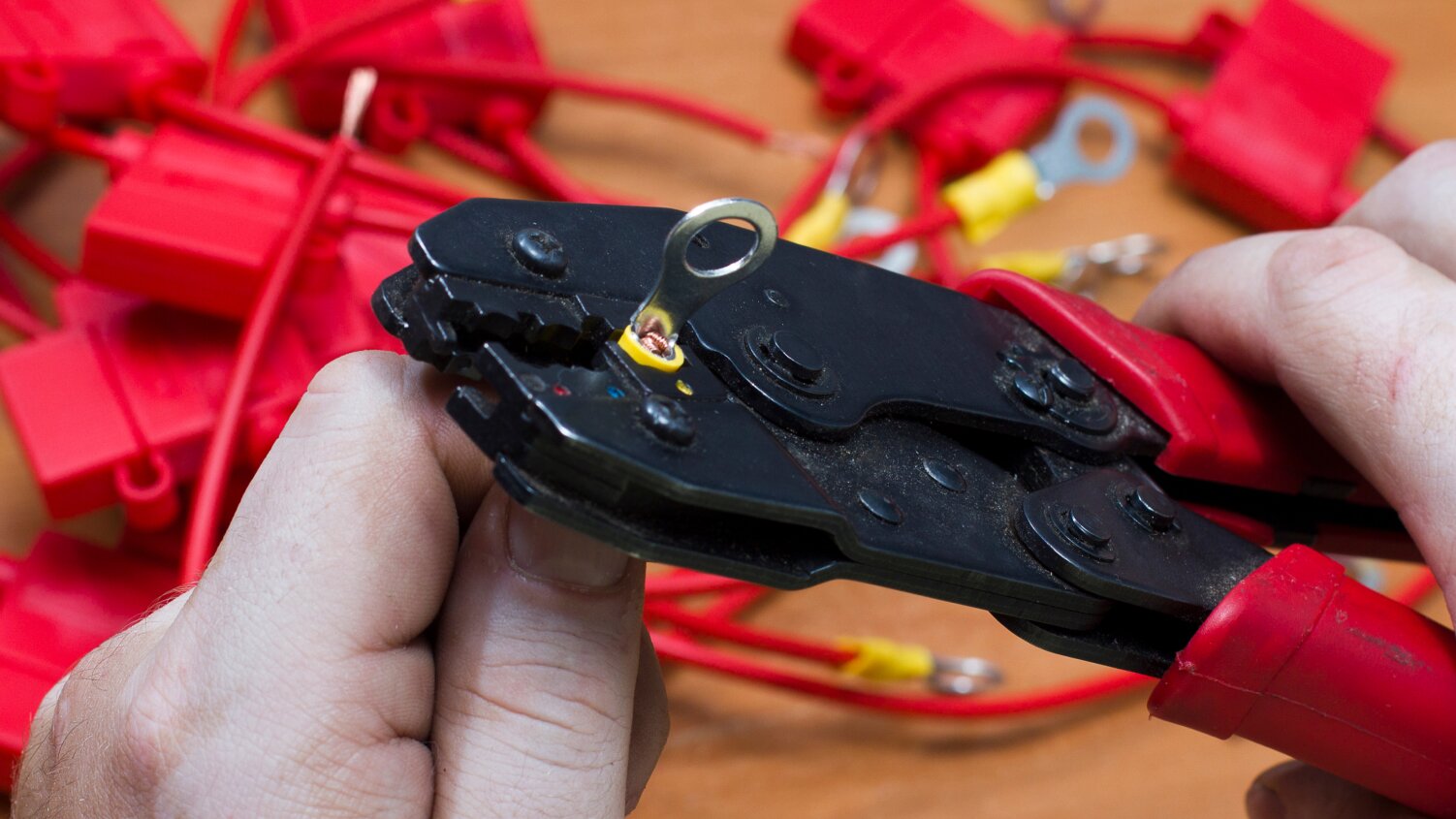
Crimping might not be the flashiest part of the job, but when you need a connection that holds through vibration, moisture, or heat, it’s one of the most important. Whether you're wiring up a control panel, installing solar gear, or running PEX, using the right crimp can make all the difference. Here’s a quick guide to crimp types and when to use them.
What’s a Crimp, Anyway?
A crimp is a mechanically formed connection created by compressing a terminal or fitting around a wire or pipe. It replaces solder in many pro applications and offers:
- Solid electrical contact
- Mechanical strength
- Resistance to vibration and corrosion
Common Crimp Types and Where They Work
Insulated Crimps
These have plastic collars that offer strain relief and prevent shorts. They're color-coded by wire size and ideal for residential and commercial electrical work.
Non-Insulated Crimps
Used in tight spaces or where heat-shrink will be added. Common in automotive, marine, and retrofits.
Open Barrel Crimps (F-Crimps)
Two wings wrap around the wire and insulation. These are vibration-resistant and often found in automotive harnesses and OEM wiring.
Closed Barrel Crimps
Used with ring terminals and butt splices. They’re compatible with hex, oval, or indent dies and work well in power distribution and control panels.
Crimp Shapes
Hex Crimp
Six-sided shape for even pressure; used in power lugs and grounding.
Indent Crimp
Punctures the barrel for a strong mechanical hold; common in aerospace and telecom.
F-Crimp
Folds the wings around the wire and insulation; great for automotive wiring.
Oval Crimp
Used for tension wire and fencing; mechanical hold only, no conductivity.
Specialty Crimps You Might Use
Butt connectors for inline wire splicing
Ring and spade terminals for power and control panels
Quick-disconnects for field service work
Ferrules for multi-stranded wires in terminal blocks
RJ crimps for network and telecom
Coaxial crimps for CCTV or RF installations
PEX crimps for plumbing connections
Pro Tips for Choosing the Right Crimp
Match wire size and terminal type—check AWG or mm² ratings.
Consider the environment—will it face moisture, heat, or vibration?
Use the right die—terminal shape and tool pressure matter.
Check specs—UL, MIL-spec, or OEM standards might apply.
Final Takeaway
Crimping might seem simple, but every application demands the right connection. Choosing the right crimp type and the right tool to apply it can help your systems perform better, last longer, and pass inspection the first time. Need help sorting through terminals or outfitting your crew? We’re here with practical info and real-world tools—no guesswork needed.
