


Welding and Cutting Safety: Hazards and Precautions
Stay safe and avoid welding hazards: essential precautions and safety measures for welding and cutting operations.
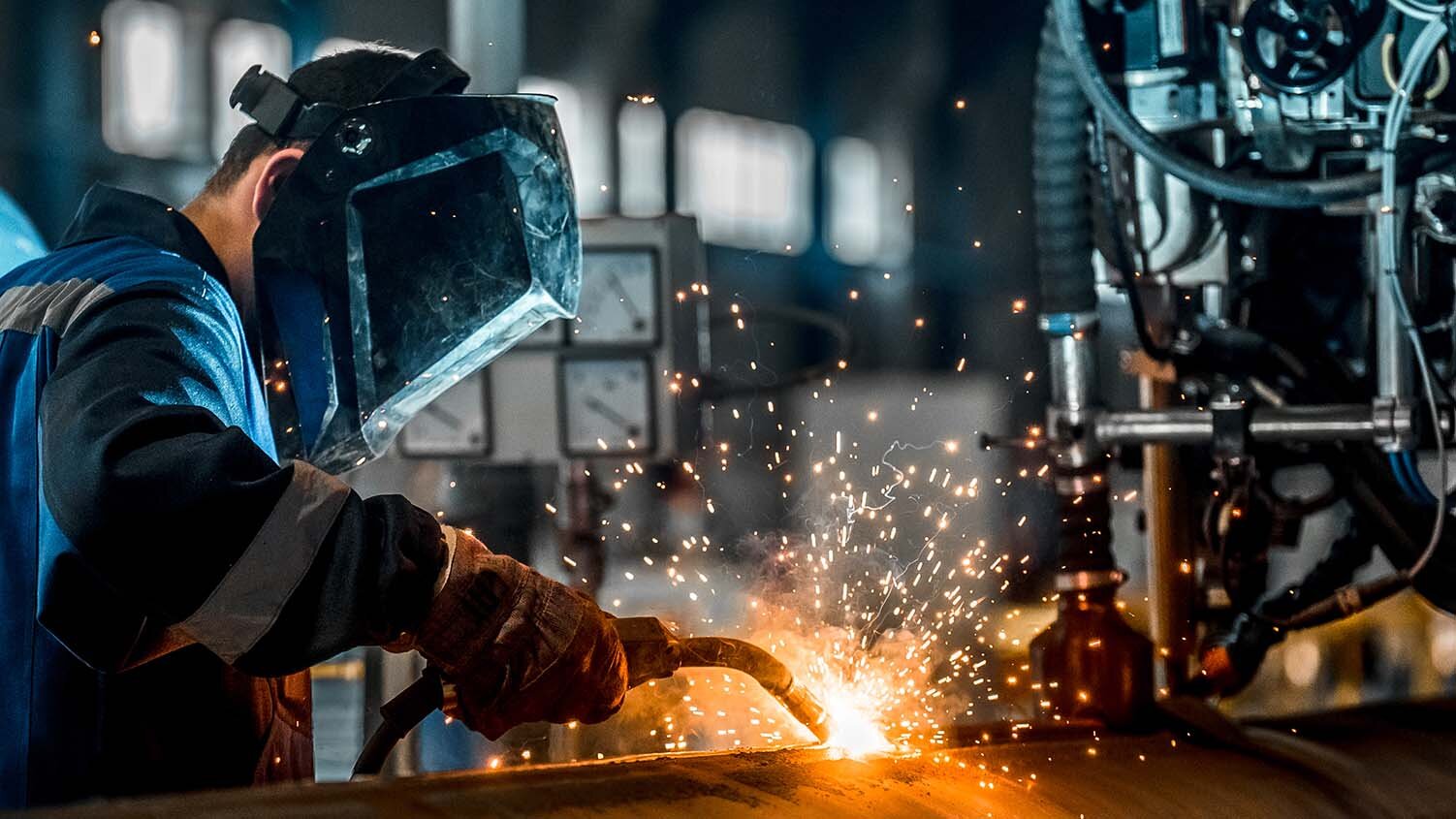
For many, it stands to reason that equipment that produces intense heat is inherently dangerous. However, welding and cutting have become so familiar on worksites, it’s easy to forget about the potential dangers. Welding and cutting safety must be a priority, no matter how commonplace it is. Let’s review some of the hazards and precautions that go along with these activities.
Complacency Is the Biggest Risk
When it comes to welding and cutting safety, nothing is more dangerous than complacency. If your workers begin to no longer think actively about safety, they become more likely to make mistakes that are otherwise easily avoidable. Reinforcing safety regularly and the procedures associated with the careful operation of welding equipment and other related tools is critical.
Common Hazards in Welding
Welders face numerous work-related hazards, especially injuries caused by flying particles, burns from hot metal, and exposure to vapors, fumes, chemicals, or UV radiation. OSHA provides specific standards related to safe practices in welding and cutting. These standards cover protective gear, ventilation and protection, fire prevention, and much more.
The dangers related to burns and flying elements are well known, while the other hazards aren’t understood as comprehensively. Exposure to vapors, fumes, and chemicals is dependent on the type of welding and cutting being done as well as the materials. These hazards can vary from being mildly irritating to possibly deadly. Workers need to be aware of the potential dangers and how to best protect themselves from these dangers.
Additionally, UV radiation can be extremely harmful to a welder’s eyes. For example, the exposure to very bright light, such as that of a welder’s arc, can cause the condition photokeratitis. With long-term exposure to UV radiation, a person can develop cataracts.
Welding Safety Steps: How to Minimize Hazards
One of the most important aspects of welding safety is to use engineering to minimize hazards. You can carry this out in several ways, one of which is to isolate welding and cutting jobs from other workers. Moving to another location eliminates the risk to other workers.
If this isn’t an option, you can still take steps to protect the area. You can use objects like screens, shields, or curtains to contain light, particles, and sparks. Use fume hoods to vent dangerous gases. It’s also a good idea to use worksite signage to alert others of the presence of possible dangerous fumes.
Welders Should Employ Personal Protective Gear
Given the possibility of injury, welders should always wear personal protective equipment. This gear includes things like helmets, safety glasses, goggles, face shields, and skullcaps. Depending on the specific hazard, some gear will be more applicable than others and depends on the worker’s proximity to the machinery.
Workers Should Have First Aid Training
Workers should be familiar with basic first aid procedures, including those for eye injuries. Immediate care to an injured worker can minimize the severity of the injury. Ensure your workers have appropriate training and that first aid kits are easily accessible.
Preventing Fires
Welding is an obvious fire hazard. Thus, fire extinguishers and fire protection equipment should always be located near welding areas. Additional precautions can also be taken to prevent the risk of fire. Keep any flammable materials far away from welding work zones. If cuts are being made at the side of a wall or enclosure, place another worker on the other side as a preventive measure.
Arc Welding and Cutting Safety Tips
Arc welding creates additional safety hazards because of the intensity of the electric current. In this situation, welders should use electrode holders rated for the maximum flow of the electrodes. Any holder parts that carry current should be fully insulated. Cables should also be insulated as well as flexible. They must also be durable enough to withstand the duty cycle. If any flaws exist in the cable, replace or repair it immediately before use.
Ground returns also should have enough capacity to support the maximum current. This is especially true if multiple workers are employing the ground return. Any electrical conduit or pipes that carry gases or flammable materials should never be used as ground returns.
Always Support Learning and Training
The most important aspect of welding and cutting safety is to support it with learning and training. Consider holding mandatory training on a regular basis to discuss new hazards and precautions. Be proactive in how you manage safety to keep your worksite injury-free.
Product Compliance and Suitability
The product statements contained in this guide are intended for general informational purposes only. Such product statements do not constitute a product recommendation or representation as to the appropriateness, accuracy, completeness, correctness or currentness of the information provided. Information provided in this guide does not replace the use by you of any manufacturer instructions, technical product manual, or other professional resource or adviser available to you. Always read, understand and follow all manufacturer instructions.
