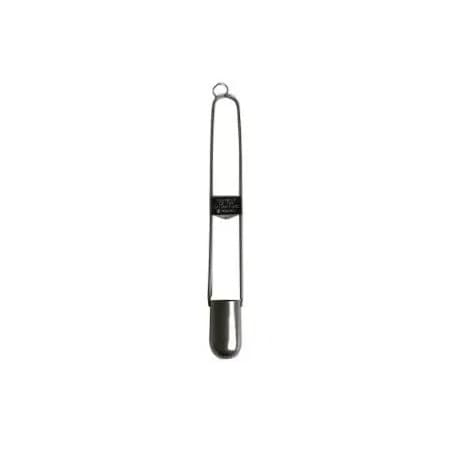
Oil and silicone standard fluids provide a way to view accurate viscosity standards when using a viscometer. Our product selection can test for conductivity standards on a cannon fenske viscometer at low, medium, and high rotational speeds to see the response levels. Checking a viscosity meter is essential for labs to establish calibration verification so that the standards are clearly met. If you're looking for additional laboratory supplies, we have an assortment of mixer accessories and microbiology supplies. Also view our bottles and jars and vials for chemical holding and mixing applications.
Frequently Asked Questions
A viscometer is a device used to measure the viscosity of a fluid. Viscosity is a measure of the resistance of a fluid to flow. Viscometers work by measuring the time it takes for a fluid to flow through a calibrated opening. The more viscous the fluid, the longer it will take to flow through the opening.
There are many different types of viscometers, each with its own advantages and disadvantages. Some of the most common types of viscometers include: capillary viscometers, falling-ball viscometers, and rotational viscometers.
The best way to choose a viscometer is to consider the following factors: the viscosity of the fluid you will be measuring, and the accuracy and precision you need.
Viscometers are used in a wide variety of applications, including: quality control, research and development, and manufacturing. They are used to measure the viscosity of fluids in a variety of industries, including the food, beverage, pharmaceutical, and chemical industries.