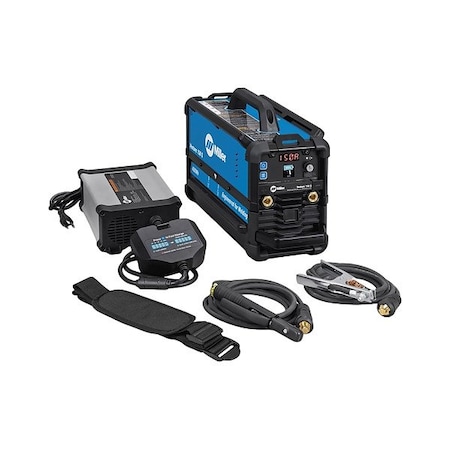
An arc welding machine uses an electrode to melt metal to create a molten seal. The arc welder may strike the arc between the metal stick (AKA stick welding or TIG welding) and the base material, melting the metal and dripping the molten metal onto and around the joint to form the seal, or the welder may similarly melt a continuous feeding metal wire (AKA MIG welding) from a wire feeder to bond to the joint and create the seal.
Frequently Asked Questions
There are three main types of arc welders: MIG welders, TIG welders, and stick welders. MIG welders are the most common type and are relatively easy to use. TIG welders are more precise and can be used for a wider variety of materials. Stick welders are the most powerful and are often used for heavy-duty applications.
Arc welding is a versatile and efficient way to join metal. It is often used in construction, manufacturing, and automotive repair. Arc welders can be used to weld a variety of materials, including steel, aluminum, and stainless steel. They are also relatively portable, making them easy to use in a variety of settings.
Arc welding can be dangerous if proper safety precautions are not taken. Always wear protective clothing, including a welding helmet, gloves, and apron. Make sure to work in a well-ventilated area and keep the welding area clear of flammable materials. Never touch the welding electrode with your bare hands.
Some common problems that you might encounter when using an arc welder include: porosity, undercut, and cold lap. Porosity is caused by gas bubbles that are trapped in the weld. Undercut is caused by the welding electrode melting away the base metal. Cold lap is caused by the weld metal not fusing properly with the base metal. These problems can be avoided by using the proper welding technique and by making sure that the welding equipment is in good working order.