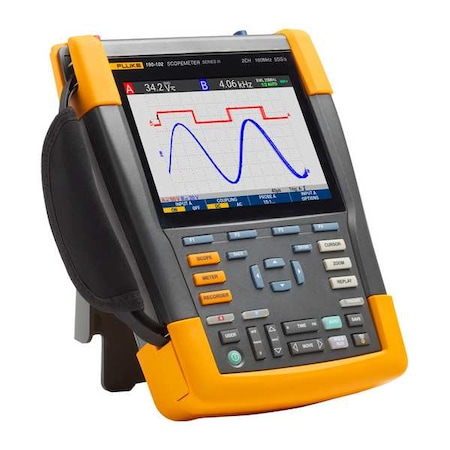
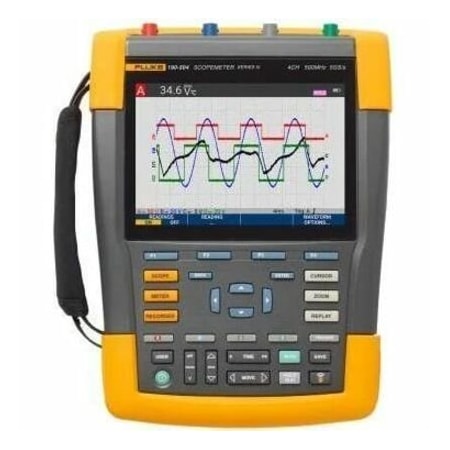
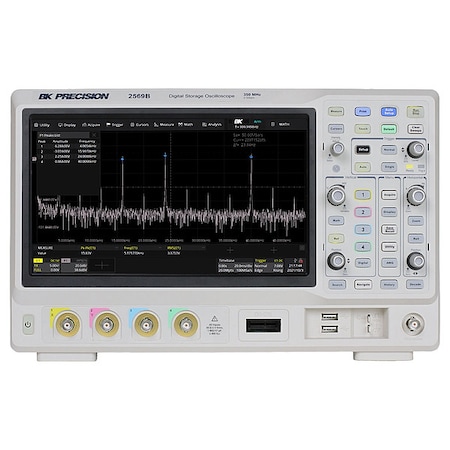
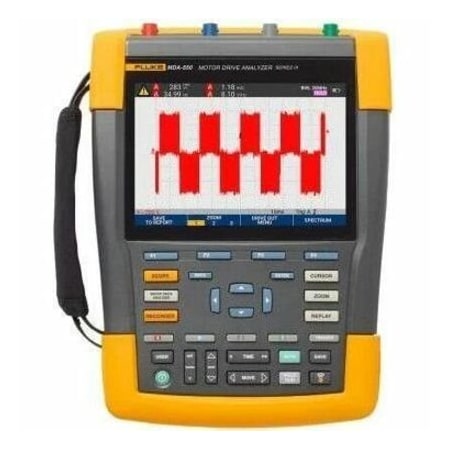
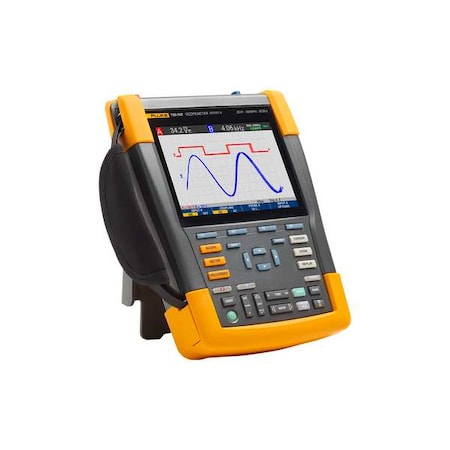
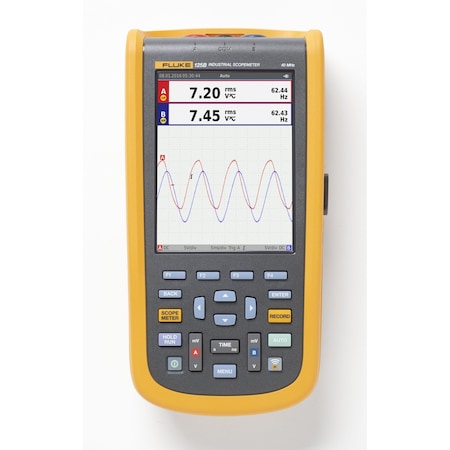
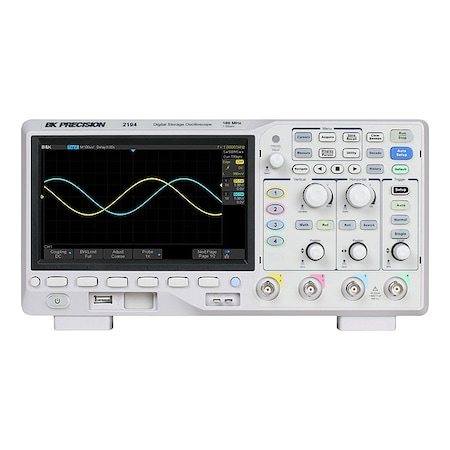
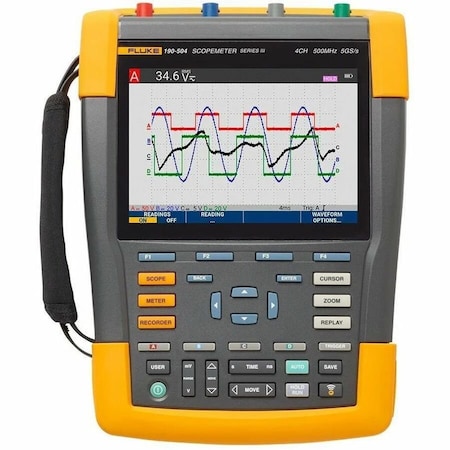
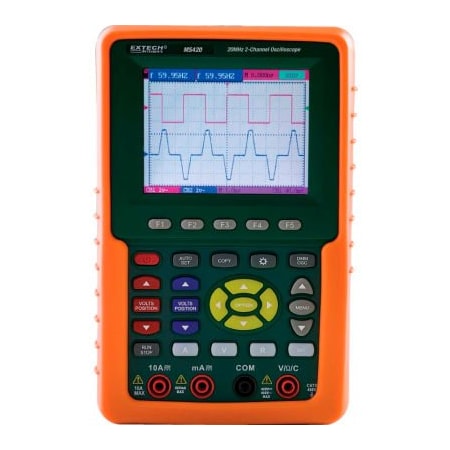
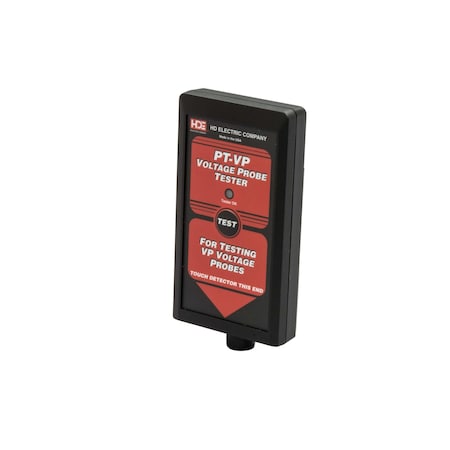
Oscilloscopes observe the change of an electrical signal over time. Unlike a traditional ammeter, which uses a detector needle mounted against a scale to measure current, a digital oscilloscope measures a bright, readable signal via a waveform. This waveform analyzes the signal’s amplitude, frequency, rise time, time interval, distortion, and more. We carry handheld oscilloscope models as well. Zoro has other testing devices, including test leads probes, current probes, analog multimeters, power meters and analyzers for every type of electrical measurement task.
Frequently Asked Questions
An oscilloscope is an electronic test instrument that provides a visual representation of the electrical signal applied to its input. It is used to analyze the waveform, frequency, amplitude, and other characteristics of the signal.
There are several types of oscilloscopes available, including analog, digital, and mixed-signal oscilloscopes. Analog oscilloscopes display the signal as a continuous waveform on a CRT screen. Digital oscilloscopes digitize the signal and store it in memory for later analysis. Mixed-signal oscilloscopes can capture both analog and digital signals.
Key features of an oscilloscope include bandwidth, sampling rate, memory depth, and trigger capabilities. Bandwidth refers to the highest frequency that the oscilloscope can accurately measure. Sampling rate determines the number of times per second that the oscilloscope samples the signal. Memory depth determines the amount of time that the oscilloscope can store the signal. Trigger capabilities allow the oscilloscope to capture specific events of interest.
Oscilloscopes are used in a wide range of applications, including debugging electronic circuits, analyzing waveforms, and measuring signal characteristics. They are commonly used in electronics design, manufacturing, and repair, as well as in laboratory and research settings.