
2026 Manufacturing Trends: What Manufacturers Should Know
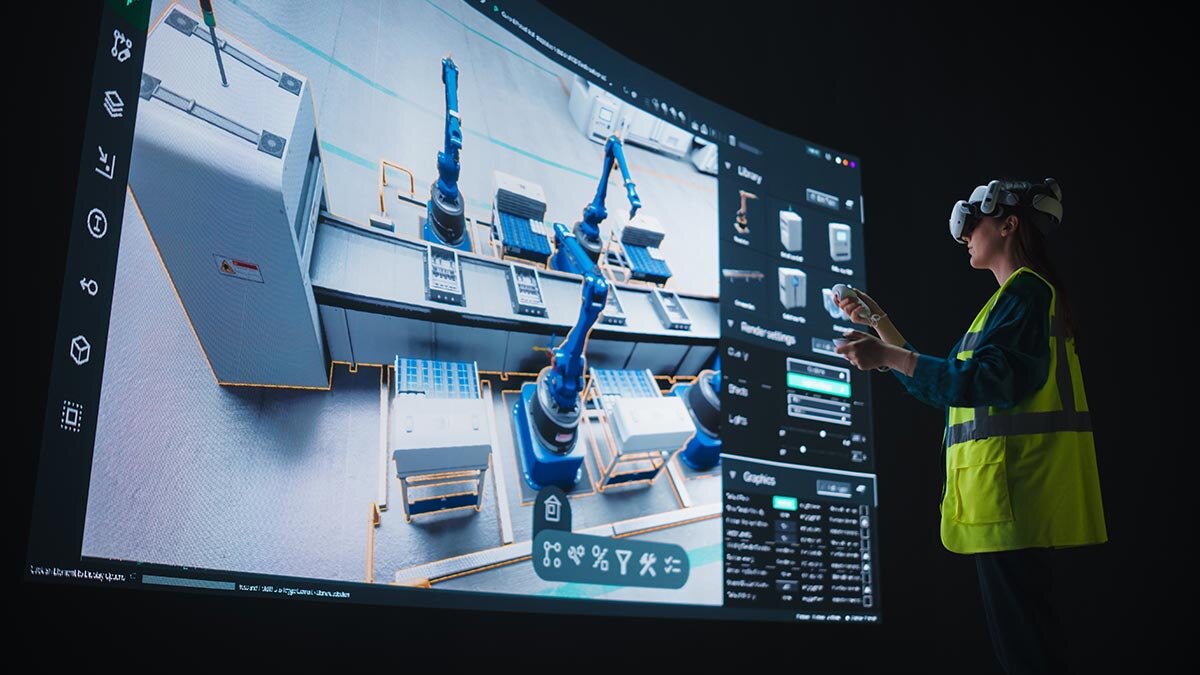
The manufacturing industry is changing fast. If you’re running an operation, you’re likely balancing production goals with rising costs, workforce challenges, and increasing pressure to modernize. The latest trends in manufacturing point to facilities that are more connected, data-driven, and flexible. Here’s a look at the 2026 manufacturing trends so far, and what they could mean for your day-to-day operations.
1. Smart Manufacturing
Smart manufacturing remains one of the most important industrial manufacturing trends this year. It brings together connected machines, real-time data, and automation to help teams make more informed decisions. According to Deloitte, many manufacturing leaders view smart manufacturing as a key driver of competitiveness, citing improvements in output, productivity, and capacity utilization. On the floor, this often looks like:
- Monitoring machine performance in real time
- Predicting maintenance needs before breakdowns
- Adjusting production schedules automatically
- Testing production changes digitally before implementation
It’s not just about adopting new technology. It's about improving visibility across operations so teams can respond faster and plan more effectively.
2. AI
Artificial intelligence is becoming a core part of digital manufacturing trends. Manufacturers already generate large volumes of data, and AI helps turn that data into usable insights.
In other words, AI is being used to:
- Identify inefficiencies in production workflows
- Capture knowledge from experienced workers
- Support faster training for new employees
- Reduce repetitive or high-risk manual tasks
These capabilities can help teams scale operations without increasing complexity. For many businesses, AI is less about replacing workers and more about supporting them with better information and tools. We explore how these applications are playing out on the shop floor in more detail in our article on AI in manufacturing.
3. AR and VR
Augmented reality (AR) and virtual reality (VR) are becoming more common in training and maintenance applications. AR can provide technicians with real-time, hands-free information while working on equipment. VR can simulate complex or hazardous scenarios, allowing employees to train safely.
These tools can help:
- Improve training consistency
- Support faster onboarding
- Reinforce safety practices
4. Digital Twins
Digital twins are gaining traction as manufacturers look for ways to test and optimize processes before making physical changes. A digital twin creates a virtual model of your facility or production line.
This allows teams to:
- Simulate process changes
- Evaluate layout adjustments
- Run “what-if” scenarios before committing resources
As these tools become more accessible, they’re helping manufacturers reduce risk and improve decision-making when it comes to production planning.
5. Smart Sensors
Smart sensors play a key role in collecting and filtering data directly from equipment. Instead of sending constant data streams, they report only when specific conditions are met.
For example, sensors can alert teams when:
- Temperature exceeds safe limits
- Equipment speed drops below target levels
- Pressure or load conditions change unexpectedly
This targeted approach helps teams focus on meaningful events rather than sorting through unnecessary data.
6. Internet of Things (IoT) and Remote Monitoring
The rise of the Internet of Things (IoT) continues to drive manufacturing industry growth trends. Connected equipment allows teams to monitor performance from anywhere, which can be especially valuable across multiple facilities.
With remote monitoring, manufacturers can:
- Track machine performance in real time
- Diagnose issues without being on-site
- Optimize uptime and maintenance schedules
This level of visibility supports more proactive operations and helps reduce unplanned downtime.
7. Cybersecurity
As more systems become connected, cybersecurity is becoming a growing concern across the manufacturing industry.
Increased connectivity introduces risks such as:
- Vulnerabilities in third-party systems
- Exposure to AI-driven cyber threats
- Disruptions across digital supply chains
This trend highlights the importance of reviewing security protocols and ensuring systems are updated alongside new technology adoption.
8. 3D Printing and Additive Manufacturing
3D printing and additive manufacturing continue to evolve as practical tools in production environments.
These technologies support:
- Faster prototyping
- Greater customization of parts
- Reduced reliance on external suppliers for certain components
In some cases, teams can produce replacement parts on demand, helping reduce downtime and improve responsiveness. Hybrid approaches that combine additive and traditional manufacturing methods are also becoming more common. If you're evaluating where additive manufacturing fits into your operation, check out our article that explores key use cases and considerations.
9. Workforce Development
Even with advances in automation, people remain central to manufacturing operations. One of the most consistent manufacturing industry growth trends is the need for skilled workers who can operate and maintain advanced systems.
Many manufacturers are focusing on:
- Upskilling current employees
- Integrating training with new technologies
- Building knowledge-sharing systems across teams
A 2025 Deloitte survey found that equipping workers with the skills needed for smart manufacturing is a top concern for many organizations.
Key Takeaways
The goal isn’t to adopt every new technology all at once, but to focus on small, targeted changes. Whether that’s adding remote monitoring, improving training, or strengthening supplier networks, this all can have a meaningful impact on day-to-day operations. As the manufacturing industry continues to evolve, manufacturers that combine practical technology adoption with a strong operational foundation will be better positioned to navigate uncertainty and support long-term growth.
Product Compliance and Suitability
The statements contained in this guide are intended for general informational purposes only. Such statements do not constitute a product recommendation or representation as to the appropriateness, accuracy, completeness, correctness, or currentness of the information provided. Information provided in this guide does not replace the use by you of any manufacturer instructions, technical product manual, or other professional resource or adviser available to you. Always read, understand, and follow all manufacturer instructions. Portions of this article were generated in part by ChatGPT, and edited by a member of the Zoro team.
