
AI in Manufacturing: Trends and Applications for Small and Mid-Sized Businesses
AI in Manufacturing: Trends and Applications for Small and Mid-Sized Businesses
Manufacturers are under constant pressure. There’s an industry demand to improve efficiency, manage costs, handle shifting demand, and navigate labor shortages. At the same time, production needs to keep moving forward.
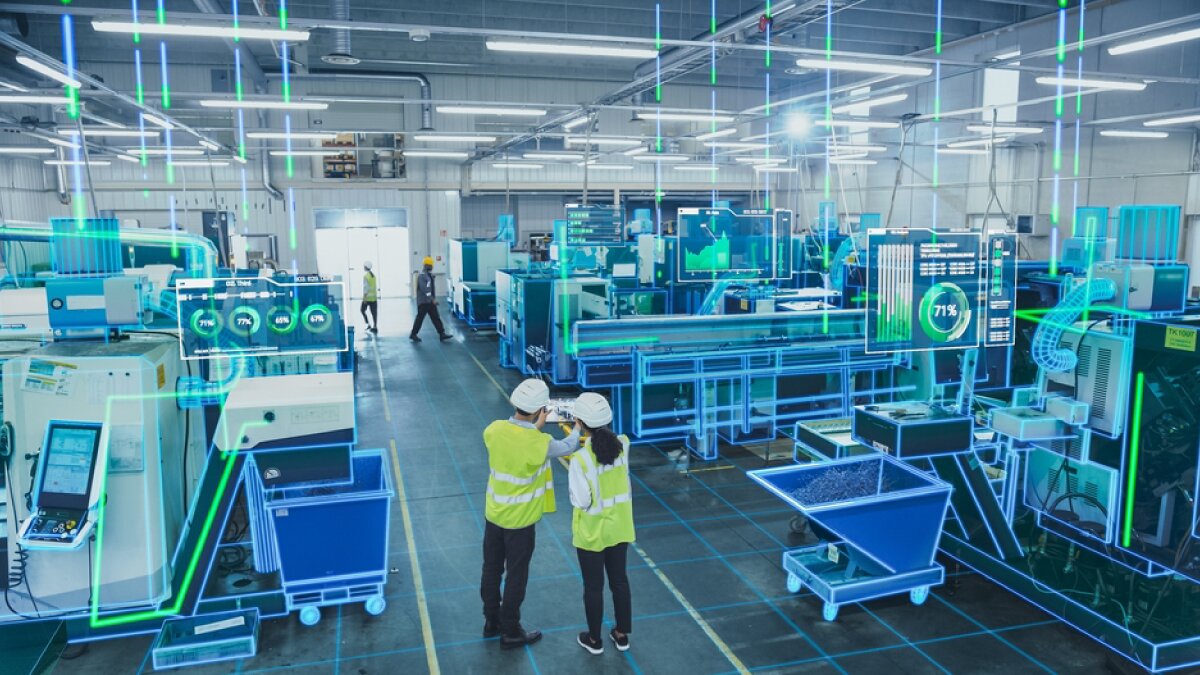
That pressure is driving more businesses to explore the use of AI in manufacturing. What once seemed out of reach for smaller operations is becoming more practical for everyday use. Small and mid-sized manufacturers are starting to use AI tools to support tasks such as maintenance planning, quality checks, scheduling, and inventory management.
Small businesses, defined as companies with fewer than 500 employees, are moving beyond early testing to more practical applications. Data from the SBA Office of Advocacy and U.S. Chamber of Commerce shows adoption among small businesses increased from 6.3% in February 2024 to 8.8% in August 2025. In addition, 96% of SMBs report plans to invest in emerging technologies such as AI. This shift points to a broader trend. AI tools are becoming easier to access, use, and incorporate into daily operations.
How Automation Adoption Varies by Plant Size
Automation adoption generally increases as plant size grows, but it is present across operations of all sizes. Data on robot usage shows growing adoption as the workforce size grows.
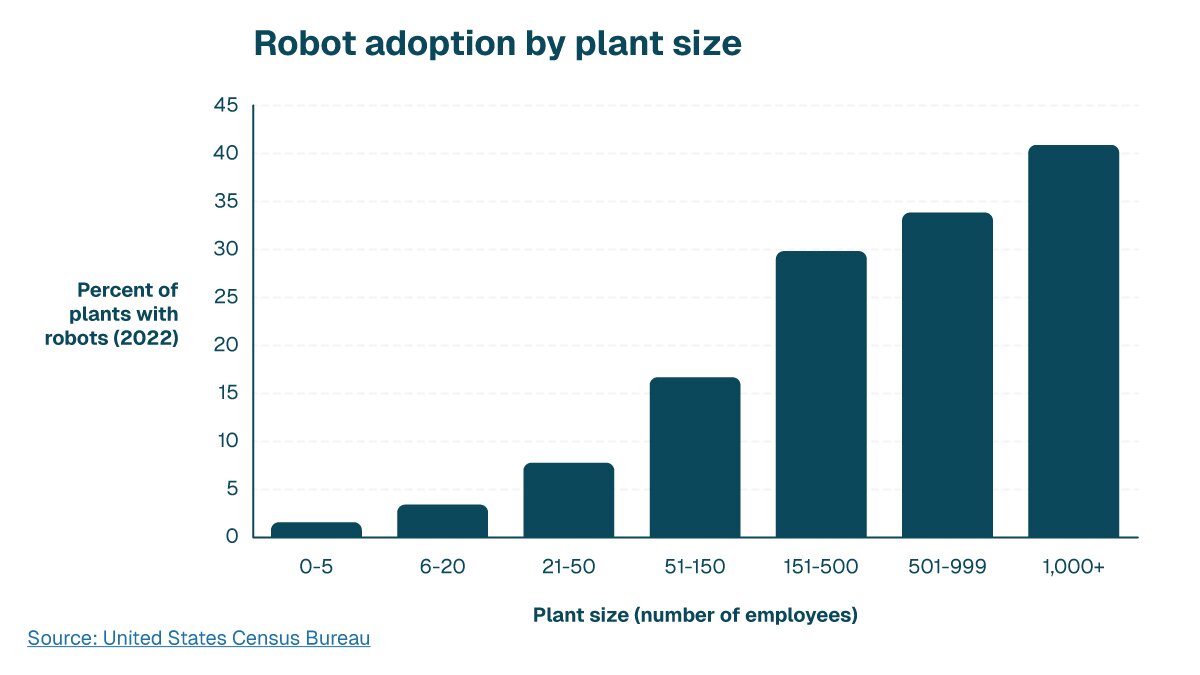
While larger facilities are more likely to adopt robotics, smaller and mid-sized operations are also finding ways to put automation to work. The numbers suggest automation is no longer limited to large enterprises.
Top AI Use Cases in Manufacturing
AI is helping manufacturers tackle everyday operational challenges faster and more accurately. Some of the most common use cases include:
Quality Control
AI-powered inspection systems can identify defects, with reported accuracy rates between 98% and 99.5%.
Predictive Maintenance
AI models used for predictive maintenance have demonstrated failure prediction accuracy between 90% and 95%.
Production Scheduling
AI-supported scheduling tools have been linked to efficiency improvements of 80% to 90% in meeting production targets.
Supply Chain Planning
AI applications in supply chain optimization can reduce costs by 15% to 25%, particularly in demand forecasting and logistics coordination.
Where Generative AI Fits
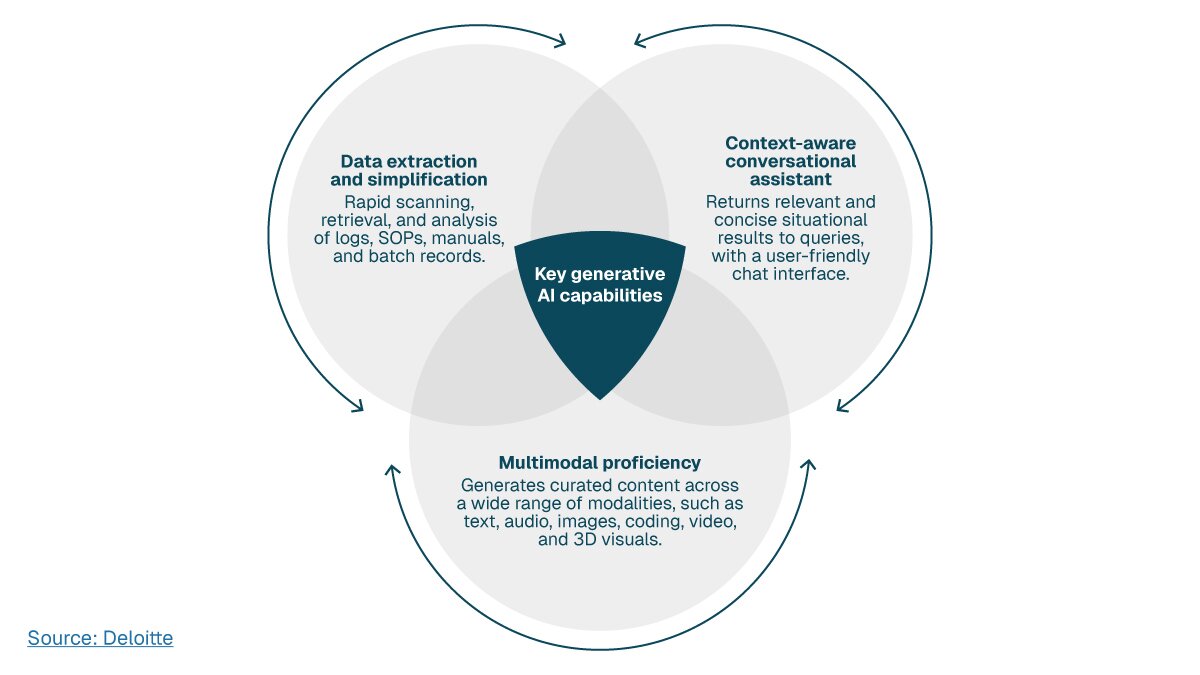
Generative AI is changing how manufacturing teams access and work with information. According to Deloitte research, some of the most practical use cases include:
- Data extraction and simplification
- Context-aware assistance
- Multimodal functionality across text and visual data
In many cases, these tools are helping employees find answers faster, simplify workflows, and reduce time spent searching through documentation or systems.
What to Consider Before Starting
Data Readiness
AI systems rely on accurate, accessible data. Without consistent data sources, results can be limited.
Skills and Training
A lack of trained personnel remains one of the most common barriers to adoption. It affects 46% of business leaders, according to McKinsey data.
Cost and Evaluation
AI projects often require testing and adjustment before results become measurable. That can make it difficult to estimate costs and ROI upfront, according to research published in academic and industry studies.
Internal Alignment
Leadership support and employee buy-in can play a major role in whether AI initiatives succeed over the long term.
Workforce and Operational Impact
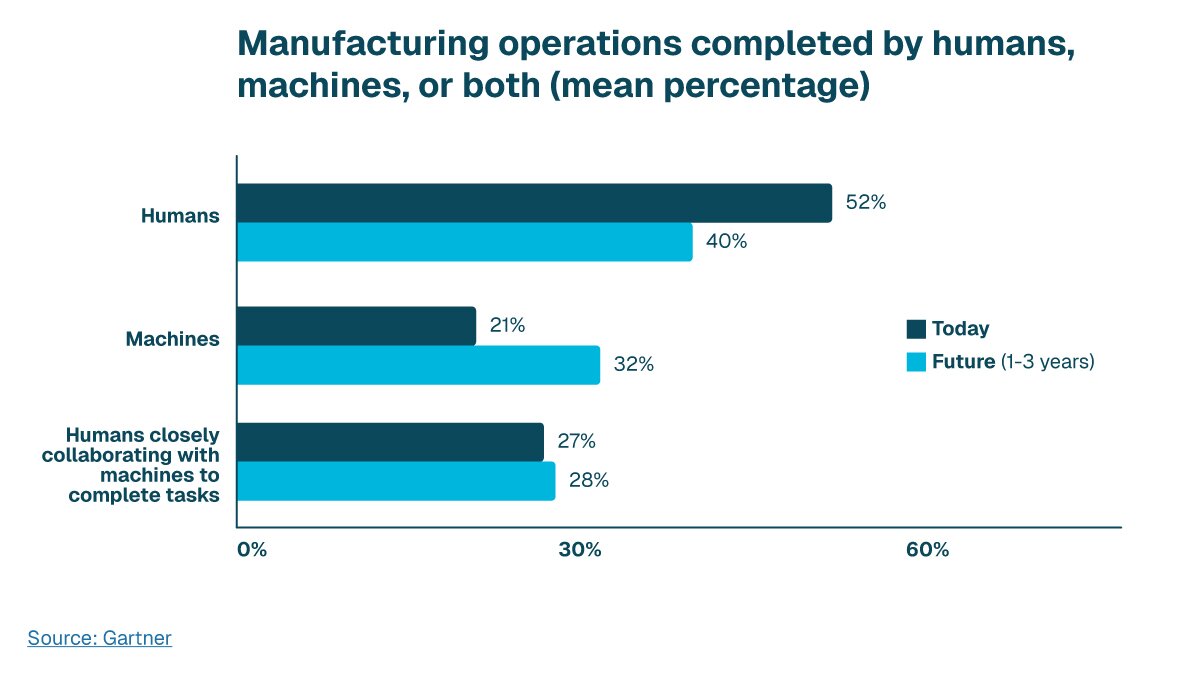
AI is changing how work gets done on the manufacturing floor, but it’s not necessarily replacing workers altogether. Gartner research suggests a shift toward increased collaboration between people and machines, with routine tasks increasingly supported by automation.
At the same time, labor shortages remain a major concern. A 2024 Deloitte manufacturing study estimates that manufacturers may need up to 3.8 million new workers by 2033 to meet demand. Also, 85% of manufacturers said smart manufacturing initiatives could help bring new talent to the industry.
Getting Started with AI
For many small and mid-sized manufacturers, adoption is more manageable when starting small. Industry guidance, including insights from organizations such as Deloitte, suggests focusing on small, targeted uses to build a foundation for broader adoption.
Common starting points include:
- Quality inspection systems
- Predictive maintenance for key equipment
- Demand forecasting and inventory planning
This approach gives businesses a chance to test solutions, measure results, and expand over time based on what works. As industry technology advances, AI is becoming more accessible to manufacturers of all sizes, with small and mid-sized businesses finding more practical applications. Data from government agencies, industry research, and consulting firms shows that adoption is growing alongside improvements in tools and infrastructure. By focusing on clear use cases, data readiness, and incremental implementation, manufacturers can align AI initiatives with operational needs while building long-term capability.
Product Compliance and Suitability
The statements contained in this guide are intended for general informational purposes only. Such statements do not constitute a product recommendation or representation as to the appropriateness, accuracy, completeness, correctness, or currentness of the information provided. Information provided in this guide does not replace the use by you of any manufacturer instructions, technical product manual, or other professional resource or adviser available to you. Always read, understand, and follow all manufacturer instructions. Portions of this article were generated in part by ChatGPT, and edited by a member of the Zoro team.
