How to Choose the Right Safety Footwear for Your Business
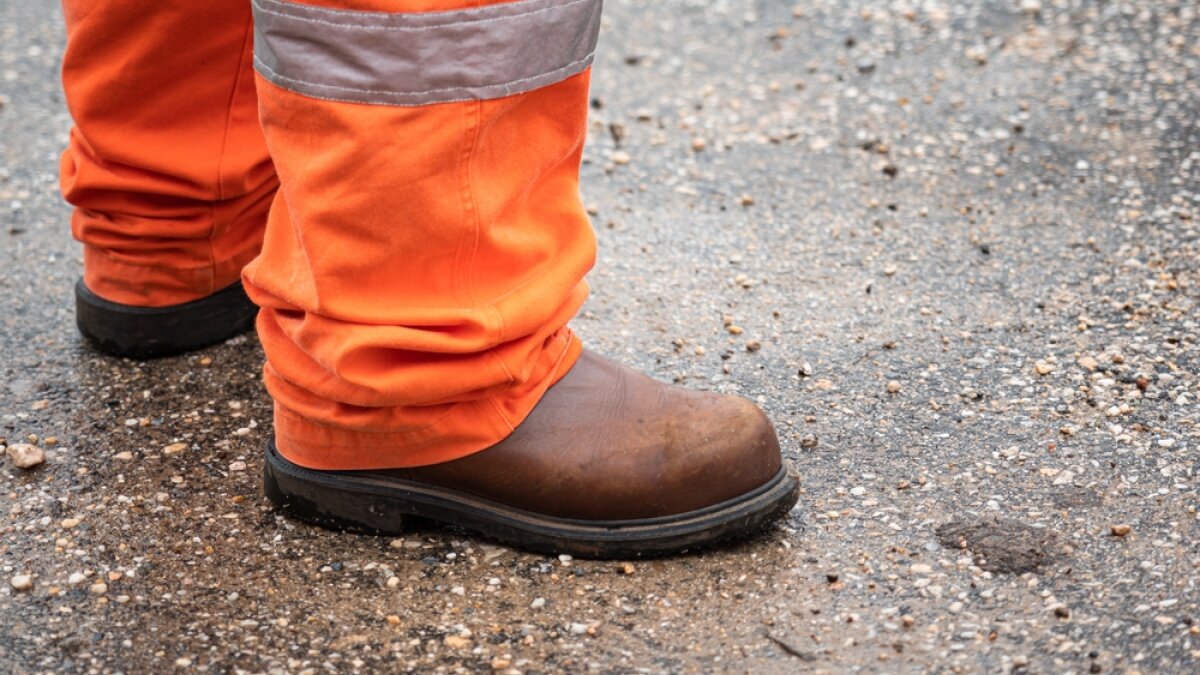
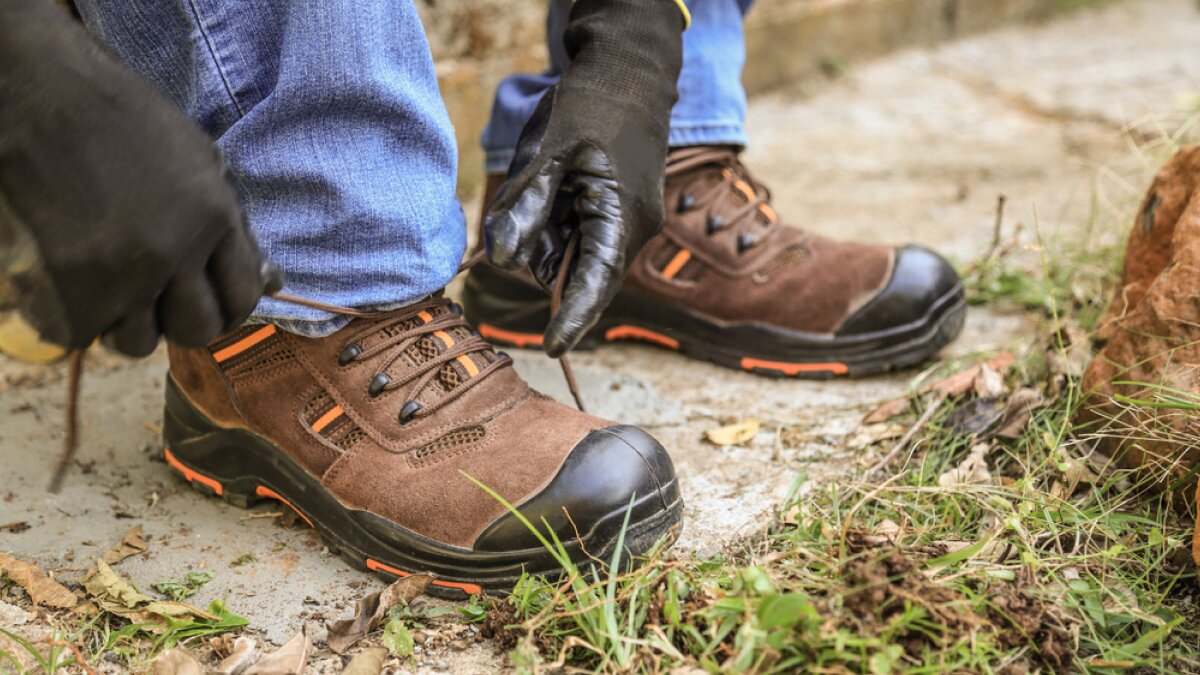
As a business owner, you know how important it is to provide your employees with the PPE they need such as respirators, hard hats, hearing protection, eye protection, and fall protection. But how often do you think about the importance of protecting their feet? It’s worth a pause, considering that the U.S. Bureau of Labor Statistics reported that there were nearly 45,000 on-the-job foot injuries in 2020 alone.
Now that we’ve piqued your interest, you may be wondering which types of protective footwear your crews need to keep them safe from injuries while on the job. Your answers start with a complete assessment of the hazards your employees face. Then you can match the hazard, such as frequent falling objects, with boots that have a protective feature, such as a steel toe.
We’ll begin with all the types of safety features protective footwear can offer, then get into the types of protective footwear, and then wrap up with some additional considerations. Ready to learn more? Let’s go!
Protective Attributes That Safety Footwear Can Offer
Advancements in footwear technologies have made it possible to work safer in hazardous environments. Here are some of the most common feet-saving design features and technologies that you can find in safety footwear today.
Safety Toe: Integrated steel, metal, or composite toe protects wearers from falling or rolling objects.
Heat Resistant: Enhanced durability in hot environments.
Insulated: Provides extra warmth in cold working conditions.
Water Resistant: Repels water in wet conditions.
Waterproof: An interior liner helps keep feet dry in wet conditions.
Metatarsal Guard: Integrated top-of-foot protection.
Electrical Hazard (EH): Provides additional protection from electrical hazards.
Static Dissipative (ESD): Minimizes the build-up of static electricity.
Chemical-Resistant: Designed with rubber, neoprene, or PVC to combat exposure to harmful chemicals.
Puncture-Resistant (PR) Sole: Equipped with extra-durable materials to protect against sharp objects, such as nails or broken glass.
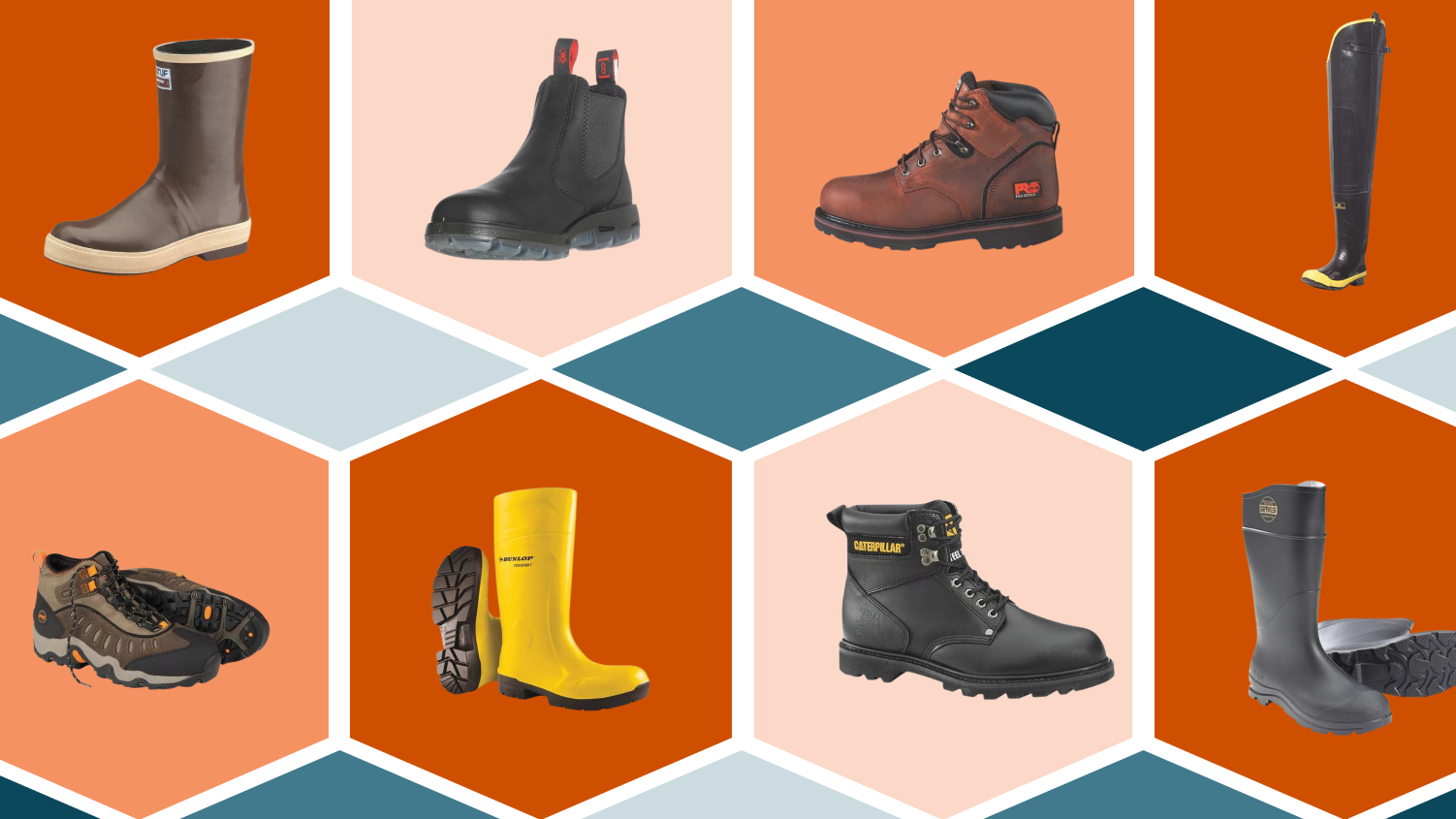
Types of Protective Footwear
| Type of Footwear | Benefits | Application |
|---|---|---|
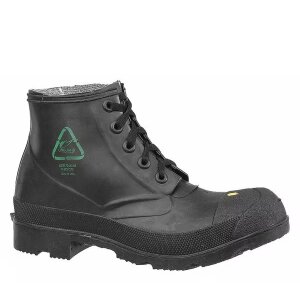 | Equipped with a steel-capped toe to provide impact protection from falling or rolling objects. | Ideal for manufacturing plants, warehouses, and other industrial facilities where heavy machinery, equipment, and objects are present. |
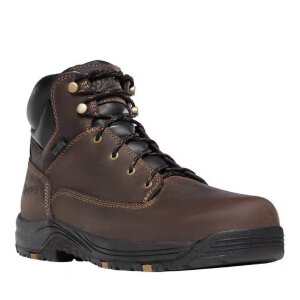 | Des up igned to be more lightweight and breathable than steel-toe boots, composite-toe boots are made of non-metal materials like carbon fiber and Kevlar and are a comfortable choice for longer wear. They are also less affected by fluctuating or extreme temperatures. | Ideal for use in extreme temperatures. The composite toe does not heat up or cool down like steel toes do. |
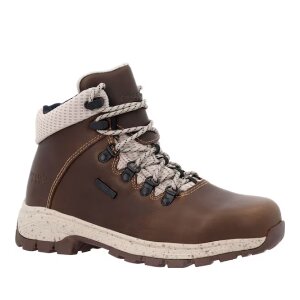 | Features durable yet lightweight materials, such as aluminum or titanium, to protect the toe from impact. | Ideal for use in industrial environments where comfort and mobility are as important as impact resistance. |
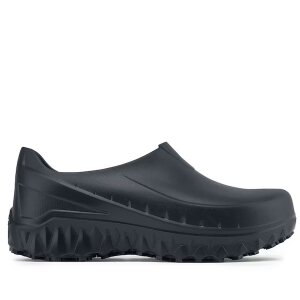 | Provides enhanced grip on slippery surfaces. | Ideal for use in foodservice, healthcare, cleaning services, and work environments with wet or oily floors. |
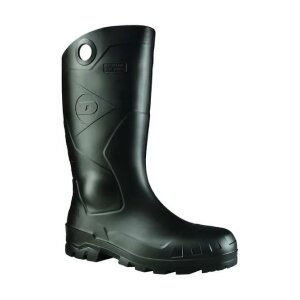 | Equipped with a membrane coating that causes water to bead and roll off the shoe, keeping your feet dry. | Harsh, wet weather conditions and/or environments where water is frequently present. |
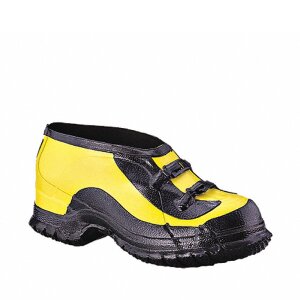 | Protects workers from stray electric currents, step voltage, and accidental exposure to live conductors. | Ideal for utility workers, repair technicians, and employees working in high-voltage environments. |
OSHA’s Regulations on Protective Footwear
OSHA has clear guidelines for employers and employees on the use of safety footwear in the workplace. Learn all about them in this article from our Resource Hub, Understanding OSHA’s Protective Footwear Standards.
Additional Factors to Consider
Here are some additional considerations to ponder before making a selection.
Find the Right Fit
Finding the right fit means more than just selecting the right size. Are the materials used in the boot or shoe comfortable to wear for long periods of time? Is there arch support in the insole? Keep in mind that feet tend to swell as the workday goes on. People also tend to have one foot that’s slightly larger than the other. All of these data points should be considered carefully before making your buying decision.
Boot Up for Your Climate
Does your team work in cold conditions or extreme heat? Make sure their boots have insulation and waterproof properties for wintery conditions. Working in high temperatures calls for lightweight, breathable materials. Also, keep in mind the effect that temperatures can have on steel toes. Opt for a composite pair when needed.
Don’t Forget Slip Resistance
Slips, trips, and falls are common workplace accidents that are avoidable. Many work shoes claim to be slip-resistant but are lacking when the rubber meets the road. If slip resistance is important, opt for a pair that’s tested by SATRA Technology. They are the current standard in slip-resistance testing. At the very least, make sure to choose a pair that is rated for slip resistance.
Find All the Safety Footwear You Need at Zoro
Now that you know which type of protective footwear your employees should wear in your work environment, it’s time to stock up. Zoro has safety footwear for every application at great prices.
Product Compliance and Suitability
The statements contained in this guide are intended for general informational purposes only. Such statements do not constitute a product recommendation or representation as to the appropriateness, accuracy, completeness, correctness, or currentness of the information provided. Information provided in this guide does not replace the use by you of any manufacturer instructions, technical product manual, or other professional resource or adviser available to you. Always read, understand, and follow all manufacturer instructions.