


Zoro’s Ask the Expert: Why Electrical Safety Is Important, with Himanshu Joshi

Presented by Fluke and Zoro Staff
As a business owner, ensuring the safety and well-being of your employees is always critical. Electrical hazards are one of the leading causes of workplace accidents and injuries, and it is crucial to prioritize electrical safety on jobsites.
To explore the subject of electrical safety in the workplace, we spoke with Himanshu Joshi, Sales Application Manager at Fluke. He brought his expertise and experience to our conversation as we discussed the paramount importance of electrical safety.
Q: What is electrical safety?
A: Electrical hazards pose significant risks to employees and the jobsite despite being invisible. It is crucial to understand the working environment comprehensively, identify potential dangers that may impact workers on the jobsite, and remain informed and current with the relevant OSHA guidelines. By proactively addressing these factors, you can effectively mitigate electrical hazards and ensure the safety and well-being of your employees.
Q. Why is electrical safety important?
A: Electrical safety is critical, and business owners must prioritize the review of OSHA guidelines even before their crew embarks on a new project. Per the National Fire Protection Association (NFPA), five to 10 arc flash incidents occur every day, and more than 2,000 people are treated annually in burn centers with arc flash injuries, many of which result in severe burns or long-term injuries. That is why it is imperative to follow proper guidelines as needed for the job at hand.
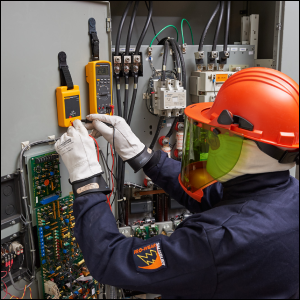
Do we need to de-energize before opening the panel door for further repair? Have we verified the circuit is de-energized? Are we ensuring appropriate Personal Protective Equipment (PPE) use and guaranteeing that employees utilize safety-rated tools? By adhering to these practices, businesses can significantly reduce the risks associated with arc flash incidents and safeguard the well-being of their workforce.
Q: What are the most critical safety concerns for electricians?
A: Arc flash accidents pose a significant threat to workers in the field, and there are numerous situations in which these incidents can transpire. For instance, accidentally dropping a tool could result in a phase-to-phase or phase-to-ground contact, thereby increasing the risk. Other factors, such as dust or corrosion within the panel, faulty installation practices, and condensation, can contribute to arc flash incidents. It is of utmost importance to address concerns such as condensation within the panel and thoroughly review the OSHA guidelines with your employees before commencing work on the jobsite. By taking these preventative measures, you can effectively mitigate the occurrence of such incidents.
Q: How can small business owners equip their employees for the most safe experience on the jobsite?
A: When undertaking any maintenance work on an electrical site, it is crucial to ensure the following measures are in place.
- Verify that the tools your employees utilize possess the appropriate safety ratings for the electrical environment they will be working in, such as Cat I, Cat II, Cat III, or Cat IV safety ratings as issued by OSHA.
- Confirm that the tools are CE or UL, CSA, or TUV certified, which can be identified by locating the corresponding symbol on the tool.
- Before making measurements, inspect the test leads. Are there any cuts or breaks? Are the probe tips damaged or in good shape? Check if the meter fuse is correct by performing a fuse test to determine the arc flash boundary. Determine the safety backup in case of an incident.
- Equip your employees with the correct Personal Protective Equipment (PPE) to ensure their safety.
- Train your crew on maintaining the appropriate distances at the jobsite (like working outside the arc flash boundary) and utilizing wireless technology and remote displays for enhanced safety if possible.
- Perform a Risk Assessment (required by NFPA 70E Section 110.1).
- Complete an energized electrical work permit (required by NFPA 70E). Established brands like Fluke prioritize electrical safety as a core value with their 75 years of reliable trust with customers.
Q. How will electrical safety change with the innovation of smart buildings?
A. Fluke's Connective Technology provides a revolutionary solution for professionals in the electrical industry. With wireless communication capabilities, this innovative feature allows seamless interaction with your tools, enhancing efficiency and convenience. Additionally, Fluke offers various tools specifically designed for solar panel compliance tests and routine maintenance. Whether you are conducting tests during installation or performing regular maintenance checks, Fluke's array of tools provides reliable and accurate solutions to ensure the optimal performance and safety of solar panels.
Q: What are some new innovations from Fluke that provide enhanced electrical safety that business owners or safety managers should know about?
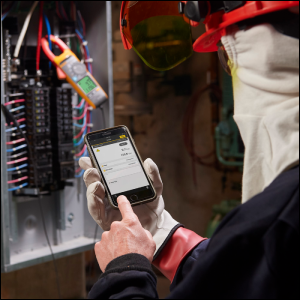
A: Fluke has various innovations to enhance electrical safety, such as connective technology, which offers the convenience of wireless communication with your tools. With this feature, while the tool conducts measurements inside the panel, you can utilize a remote display up to 30 feet away. This keeps workers safely outside the arc flash boundary zone. Furthermore, you can record measurements directly on your phone and easily share them with your coworkers, enhancing collaboration.
- Clamp meters: These eliminate the need to break the circuit to connect in series for current or voltage measurement. By clamping the meter around the wire, you can accurately measure the current amperes without direct contact. This feature dramatically enhances safety by eliminating the risks associated with traditional circuit connections.
- Proving Units: Before using your meters to take measurements, ensuring their proper functionality through testing is essential. It is critical for ‘Live Dead Live’ testing, which OSHA mandates when working with 600 volts or more. Proving units equipped with batteries capable of supplying 240 volts serve this purpose by allowing you to confirm that your meter is in good working order before proceeding to measure in the live panel. This process helps eliminate potential safety hazards and prevents the occurrence of inaccurate readings, ensuring both safety and accuracy in your measurements. Ground measurement units, thermal cameras, and IR windows further expand their range of reliable and innovative solutions for electrical safety.
Q. What is a sample checklist for basic electrical safety?
A: To ensure a safe working environment, following this sample checklist for basic electrical safety is essential.
- Multimeters: Compliance with UL or CE, appropriate CAT safety ratings, IEC ratings.
- Clamp Meters: Eliminate the need to connect in series with the live circuit. E.g., 378FC (allows for voltage and current measurement at the same time through the clamp, plus remote monitoring through a phone/tablet/pc Bluetooth).
- Proving Units: Perform a Live-Dead-Live test on your meters to a known source before taking live circuit measurements, as mandated by OSHA and NFPA 70E, when working above 600V. E.g., PRV 240FS.
- GFCI Testers: Check if the Ground fault circuit breaker functions correctly with Fluke ST120+.
- Leakage Current Clamp Meters: If your ground is faulty or absent, current can leak to any conductive part or surface, such as the human body. Fluke 369 quickly detects, documents, and records leakage current over time.
- Earth Ground Testers: When installing, repairing, or maintaining, always ensure grounding is intact. Fluke offers both stakeless and with stakes Earth Ground testers. E.g., Fluke 1630, 1625-2. 3-pole/4-pole fall of potential testing, selective measurement testing, and 2-pole testing.
- IR Windows: Install on your electrical panel doors to inspect if components are hot inside using a thermal camera, eliminating the need to open the door and be in an unsafe electrical environment.
- Hand Tools: 1000V insulated hand tools.
- Thermal Cameras: Check for hot spots using infrared cameras from a distance, eliminating contact with live/hot components and thus eliminating proximity to unsafe environments. Fluke offers a wide range of thermal cameras based on the application. E.g., Tix580pro, Ti480pro, Tis75+, Pti120+.
- Power Quality/Loggers: Fluke has a wide range of power loggers and analyzers for various applications. These ensure safe and accurate measurement/logging of three-phase/single-phase voltage/current/power. E.g., Fluke 177x series, 173x series.
- Fluke Connect: Wireless/Bluetooth technology now available with most of our offerings allows remote monitoring and control (sometimes) from a safe distance.
Q. What is the most critical aspect of electrical safety?
A: Electrical hazards often remain invisible and it’s important to keep your crew safe by always reviewing the OSHA guidelines and ensuring your crew understands the nature of their working environment and possesses the appropriate equipment, including wearing the correct Personal Protective Equipment (PPE) and maintaining safe distances. By embracing these best practices, you can effectively mitigate hazards and minimize the risk of injuries in the workplace.
Electrical hazards are significant—all the more so because the hazards are often invisible. Due to the potential for serious injury and even fatal accidents, it's extremely important that all businesses dealing with potential hazards are well-versed in the best ways to keep employees safe and have a plan in place to follow all relevant OSHA guidelines. Business owners should ensure that everyone on their team is following best practices, including using proper equipment and PPE to protect themselves on the job. Electrical injuries are very serious, but they're also avoidable—and the right approach can make a difference.
Looking for the right equipment to keep your team safe from electrical hazards? Find everything you need at Zoro.com.
Product Compliance and Suitability
The product statements contained in this guide are intended for general informational purposes only. Such product statements do not constitute a product recommendation or representation as to the appropriateness, accuracy, completeness, correctness, or currentness of the information provided. Information provided in this guide does not replace the use by you of any manufacturer instructions, technical product manual, or other professional resource or adviser available to you. Always read, understand, and follow all manufacturer instructions.
