
Supporting an Aging Manufacturing Workforce
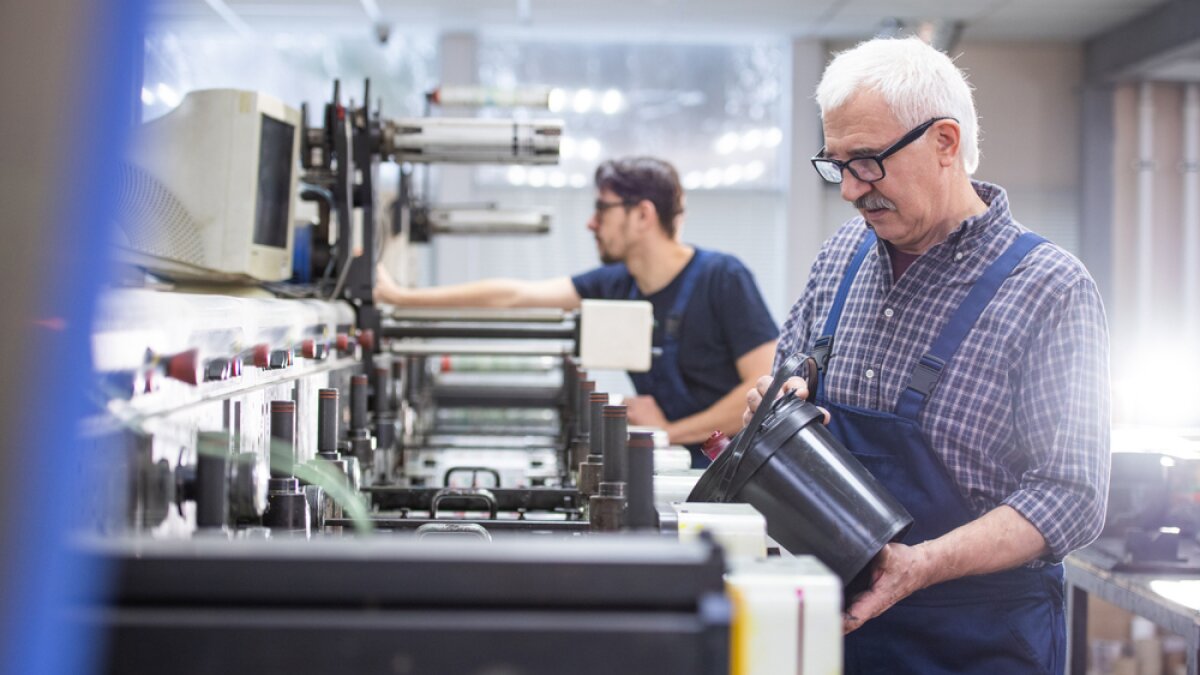
Table of Contents
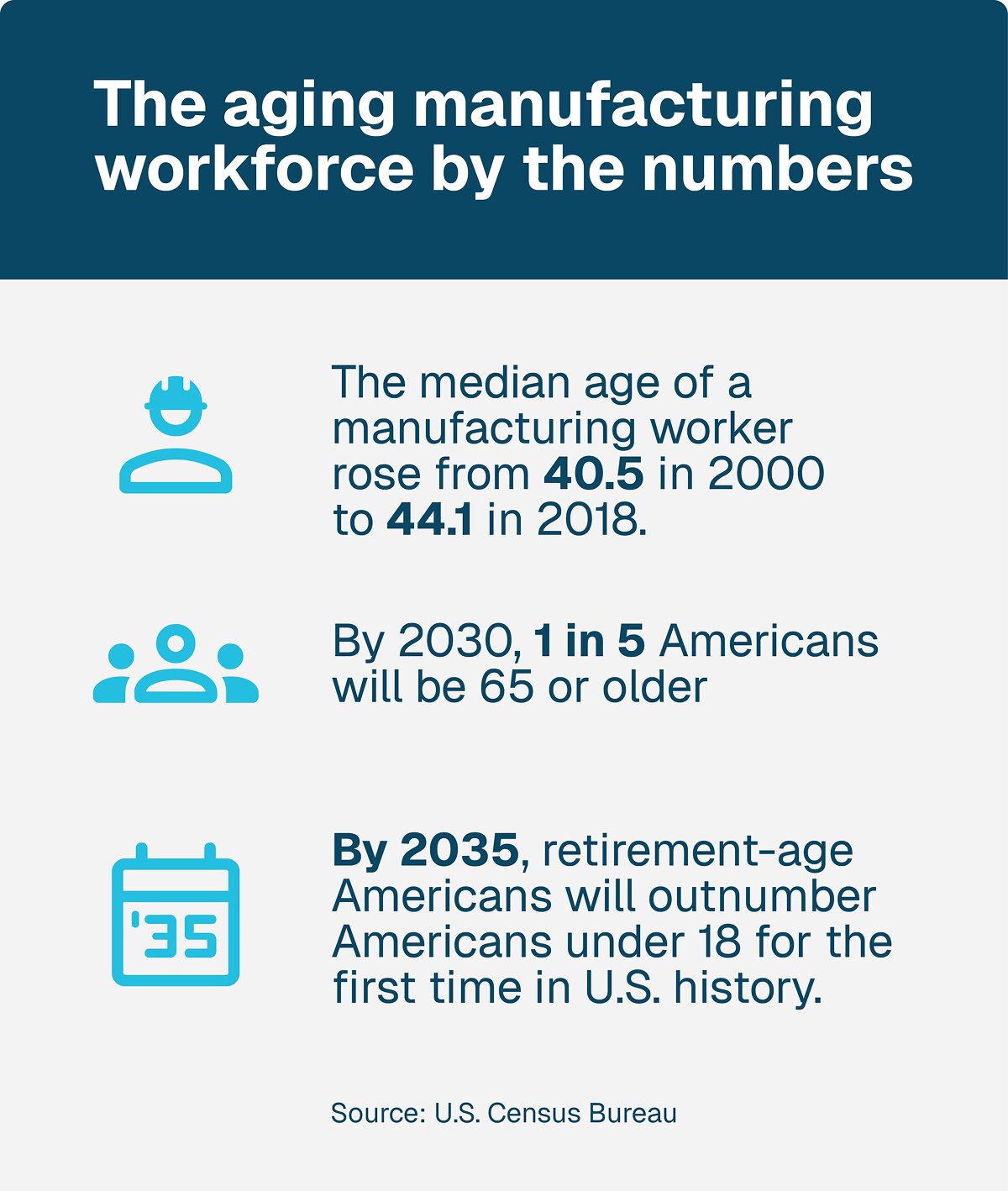
The manufacturing workforce is already older (and aging faster) than the overall U.S. labor force. As experienced employees retire and skilled labor remains difficult to replace, many businesses are looking for ways to prepare the next generation of workers. Supporting an aging manufacturing workforce isn't about replacing experienced employees. It's about creating an environment where they can continue contributing while helping newer workers develop the skills needed to keep operations running smoothly.
The Biggest Challenge: Brain Drain
Experienced employees often possess knowledge that extends well beyond written procedures. They understand how equipment has changed over time, recognize subtle warning signs before problems occur, and have developed troubleshooting techniques through years of hands-on experience. The industry’s greatest concern associated with the aging workforce is “brain drain”—the loss of institutional and technical knowledge. Without a plan to transfer that knowledge, businesses risk losing valuable operational expertise that can take years to rebuild.
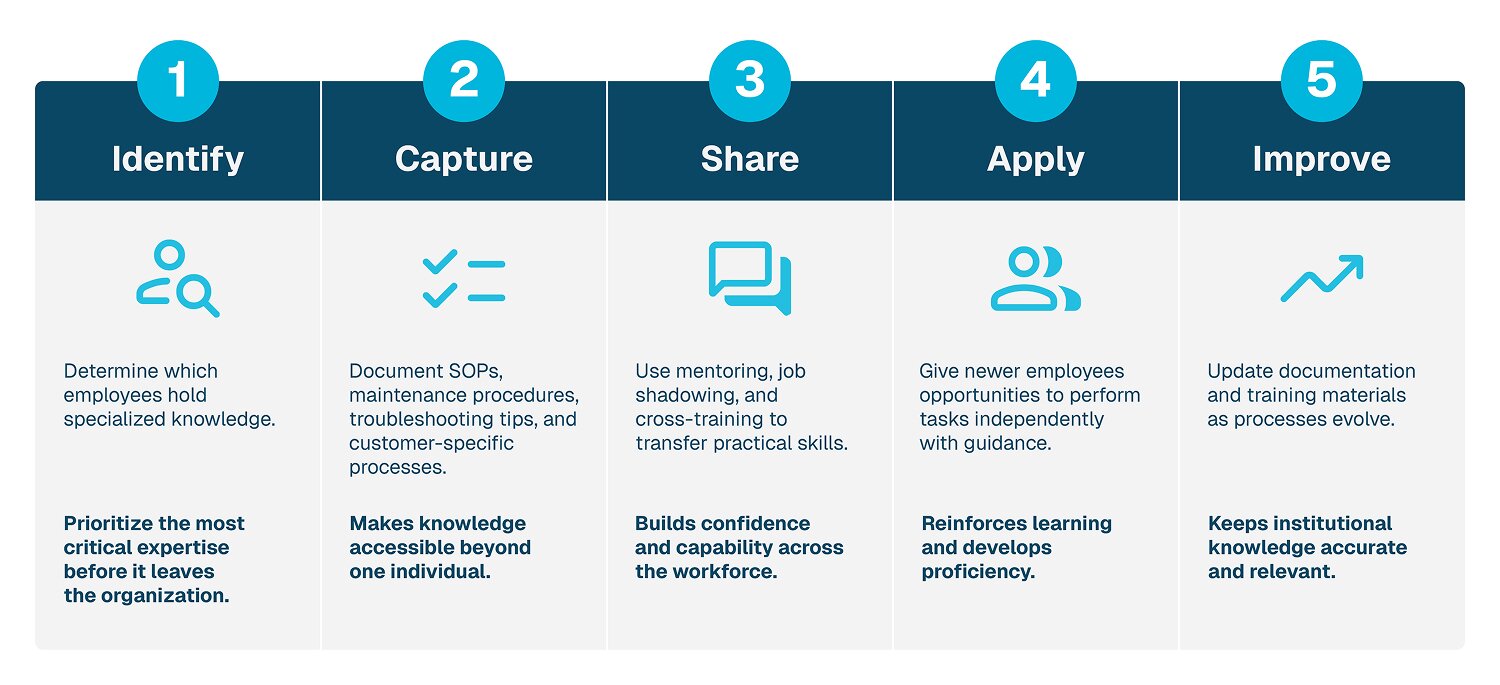
Preserving Manufacturing Knowledge in 5 Steps
Physical Demands and Potential Workplace Challenges
Manufacturing often involves physically demanding tasks. While every employee's abilities are different, physical capabilities can change over time, making workplace design an important consideration. Ergonomic improvements can help reduce unnecessary strain and create safer, more comfortable work environments for employees of all ages. Rather than focusing on age alone, many manufacturers are redesigning workstations and workflows to better fit the people performing the work.
Labor Shortages Add More Pressure
A lot of manufacturers are currently operating with open positions. When experienced employees retire before replacements are fully trained, production schedules, maintenance programs, and quality initiatives may become more difficult to maintain. Preparing for workforce transitions before they occur can help reduce disruptions and improve business continuity.
Why Supporting Older Workers Benefits Manufacturers
An experienced workforce provides advantages that are difficult to replace through hiring alone.
Institutional Knowledge
Long-tenured employees understand production processes, equipment history, customer requirements, and operational best practices. Their experience often leads to faster problem-solving and more consistent product quality.
Mentorship Opportunities
Experienced employees play an important role in training newer workers. Formal mentorship programs and job shadowing can help accelerate training while preserving practical knowledge that may not appear in standard operating procedures.
Workforce Stability
Retaining experienced employees can provide greater operational stability during periods of labor shortages or organizational change. Their familiarity with equipment, processes, and company culture can help support consistent operations.
Improved Productivity
Workforce and technology investments work together to improve productivity. Manufacturers that develop their employees’ skills while adopting new technologies are often better positioned to adapt to changing manufacturing environments.
Strategies to Support an Aging Workforce
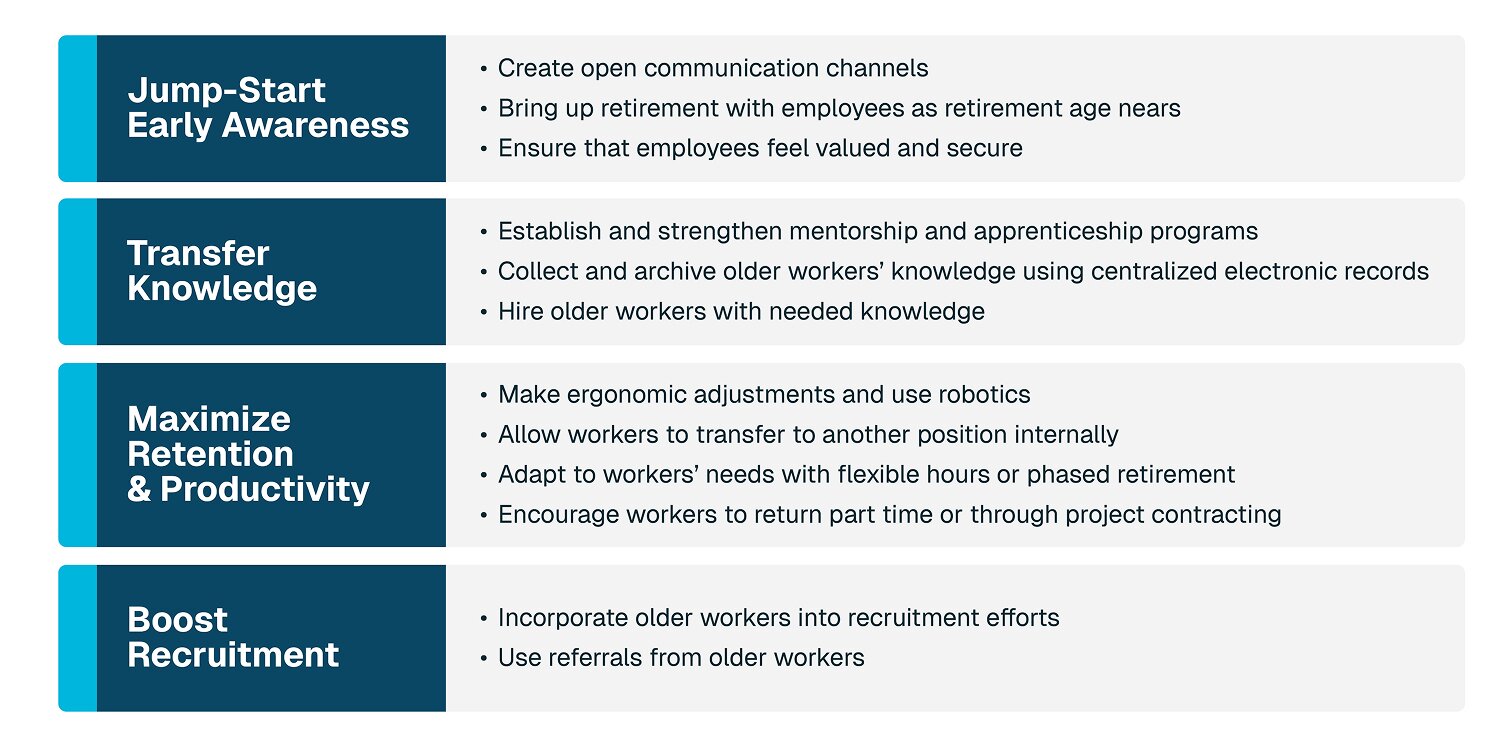
Preparing for an aging workforce requires a combination of operational planning, employee development, and workplace improvements.
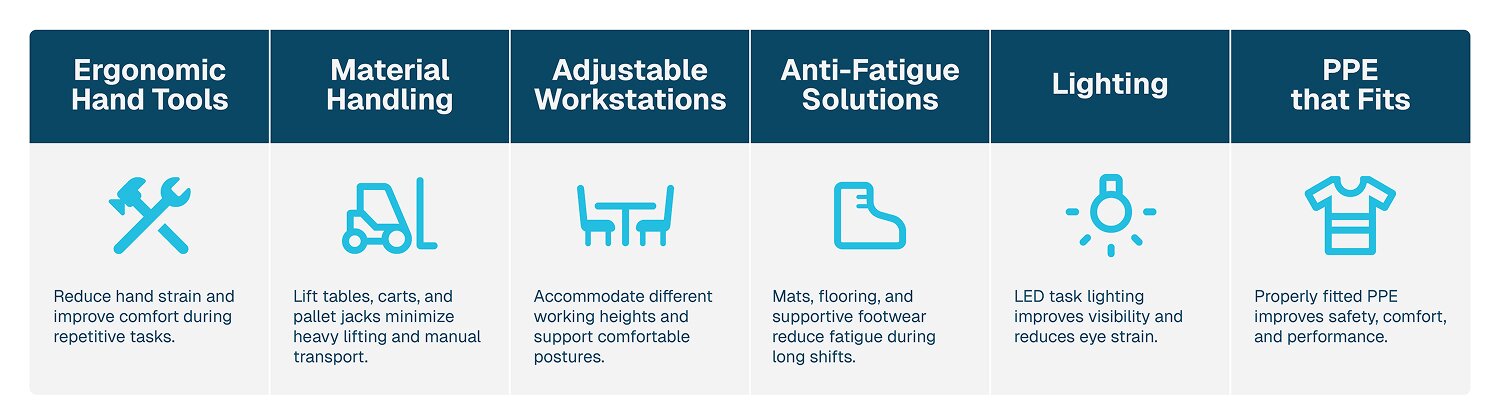
Equipment to Support an Aging Workforce
Supporting an aging workforce involves more than just policies and training. The physical work environment also plays an important role in helping employees work comfortably, safely, and efficiently. Investing in workplace improvements can benefit employees of all ages while helping reduce physical strain and supporting productivity.
Key Takeaways
Supporting experienced employees today builds a safer, smarter, and more resilient manufacturing operation for tomorrow. By investing in knowledge transfer, ergonomic improvements, workforce development, and the right equipment, manufacturers can help employees stay productive while preparing the next generation of skilled workers. These efforts not only reduce the impact of retirements but also strengthen safety, efficiency, and business continuity.
Product Compliance and Suitability
The statements contained in this guide are intended for general informational purposes only. Such statements do not constitute a product recommendation or representation as to the appropriateness, accuracy, completeness, correctness, or currentness of the information provided. Information provided in this guide does not replace the use by you of any manufacturer instructions, technical product manual, or other professional resource or adviser available to you. Always read, understand, and follow all manufacturer instructions. Portions of this article were generated in part by ChatGPT, and edited by a member of the Zoro team.
Sources
- https://www.aem.org/news/the-aging-workforce-4-ways-manufacturers-can-prepare-themselves
- https://www.themanufacturinginstitute.org/wp-content/uploads/2020/03/MI-Sloan-Aging-in-the-MFG-Workforce-Report.pdf
- https://www.mckinsey.com/industries/aerospace-and-defense/our-insights/investing-in-the-manufacturing-workforce-to-accelerate-productivity
