Using Automated Storage and Retrieval Systems in Mid-Size Manufacturing
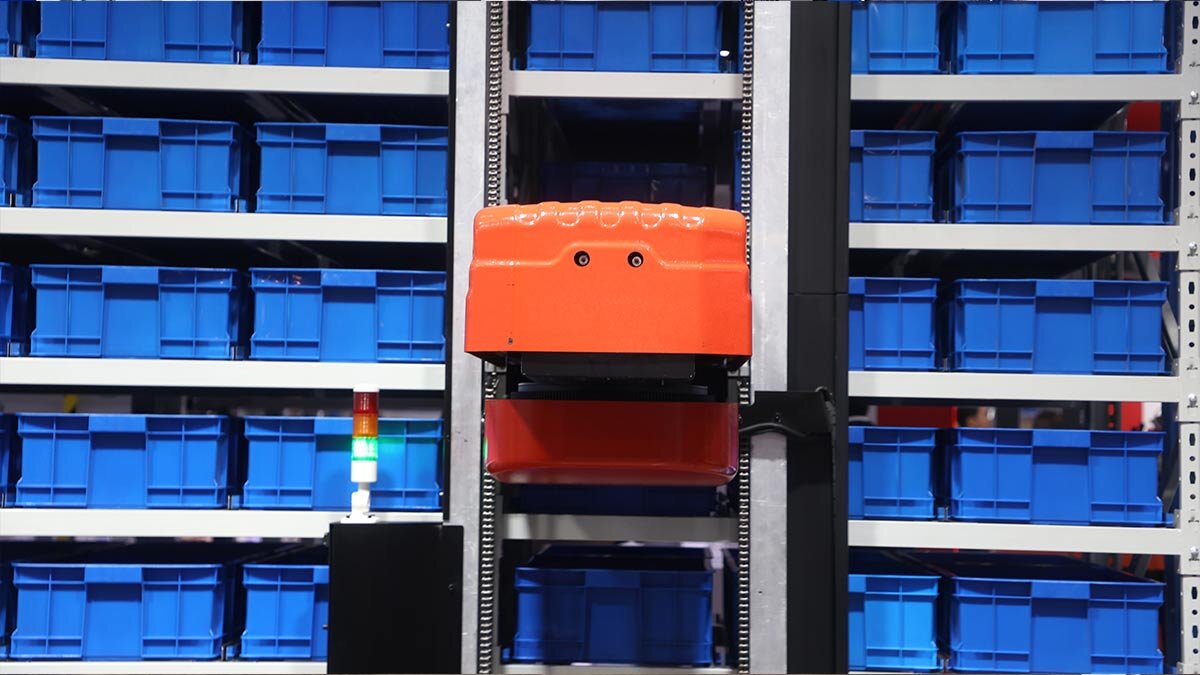
An Automated Storage and Retrieval System (ASRS) is equipment run by software that stores your goods and brings them back when you need them for production or an order. For mid-size manufacturers, it can free up warehouse space, help you keep track of inventory, and cut down on walking to pick parts. How much it helps depends on the system you choose, what you store, your building size, and how it connects to the rest of your operation.
How Does an ASRS Work?
An ASRS (or AS/RS) moves goods between storage locations and workstations automatically. Depending on the design, it may use:
- Cranes
- Shuttles
- Carousels
- Vertical lift modules
- Conveyors
- Robots
Software tracks every movement and can share data with your warehouse management system, enterprise resource planning system, or warehouse execution system.
Instead of an employee walking an aisle to find a pallet, tote, carton, or part, the system retrieves the item and delivers it to a station. This approach of bringing the goods to a person reduces travel and makes picking more consistent. The actual benefits depend on your product mix, operating rules, and equipment uptime.
Common Automated Storage Systems
Your automated warehouse storage system should align with your inventory size and profile, picking needs, available space, and facility requirements.
| System Type | Description |
Vertical Storage ASRS 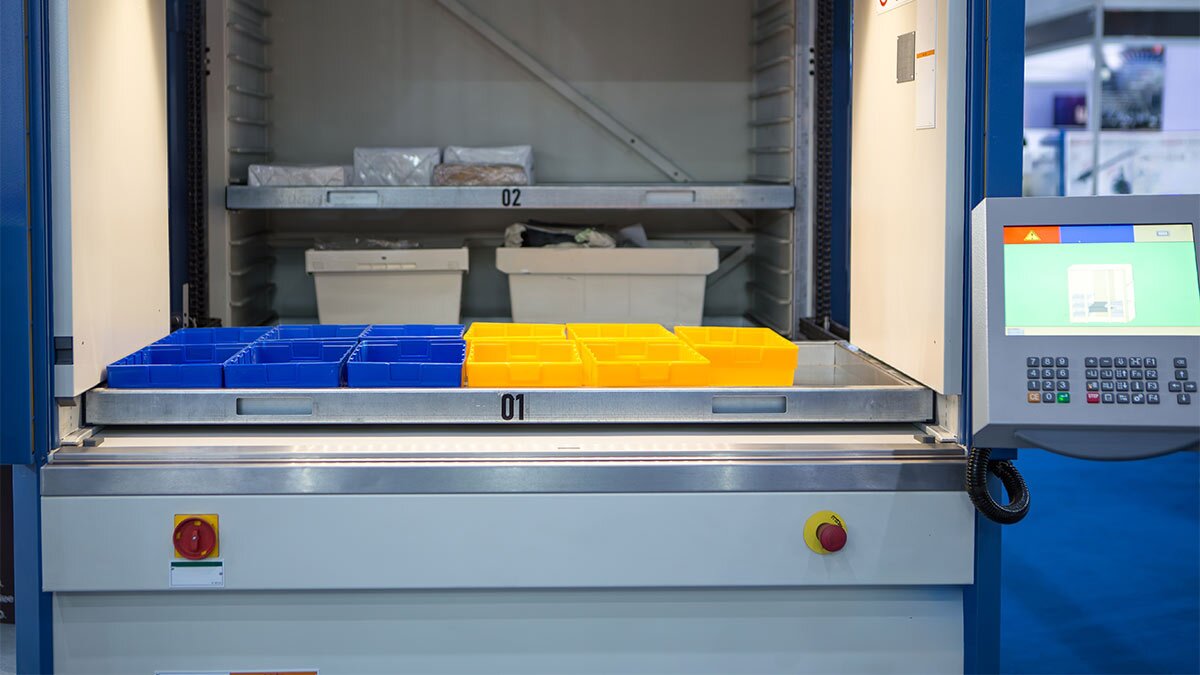 | Stores parts, tools, supplies, and smaller inventory vertically, using available ceiling height to increase storage density. |
Cube Storage ASRS 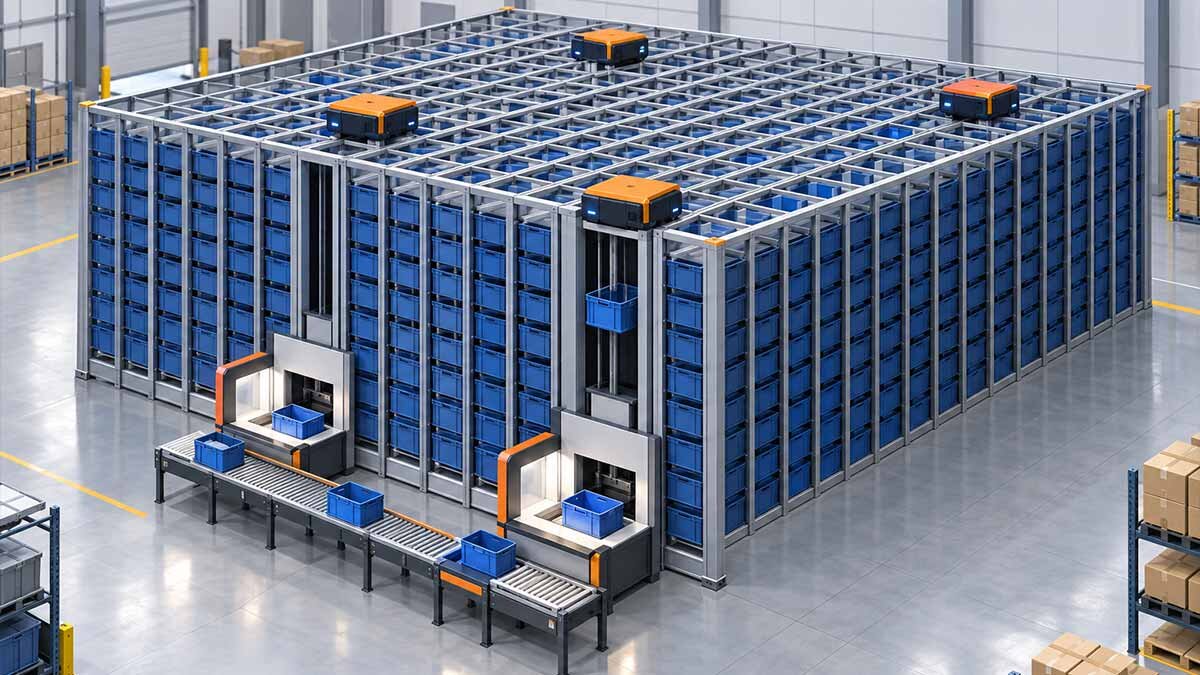 | High-density bin or tote storage supported by robots that move across the grid. |
Automated Pallet Shuttle ASRS 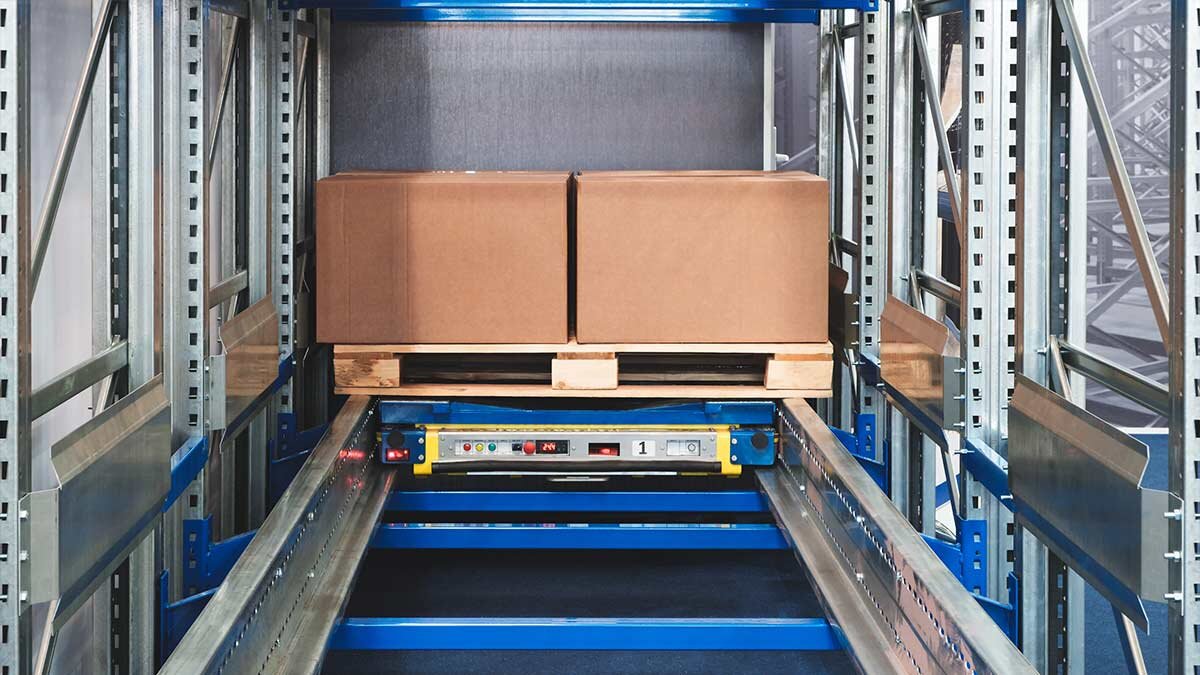 | Pallet loads stored in deep lanes and moved by motorized shuttles for high-density storage. |
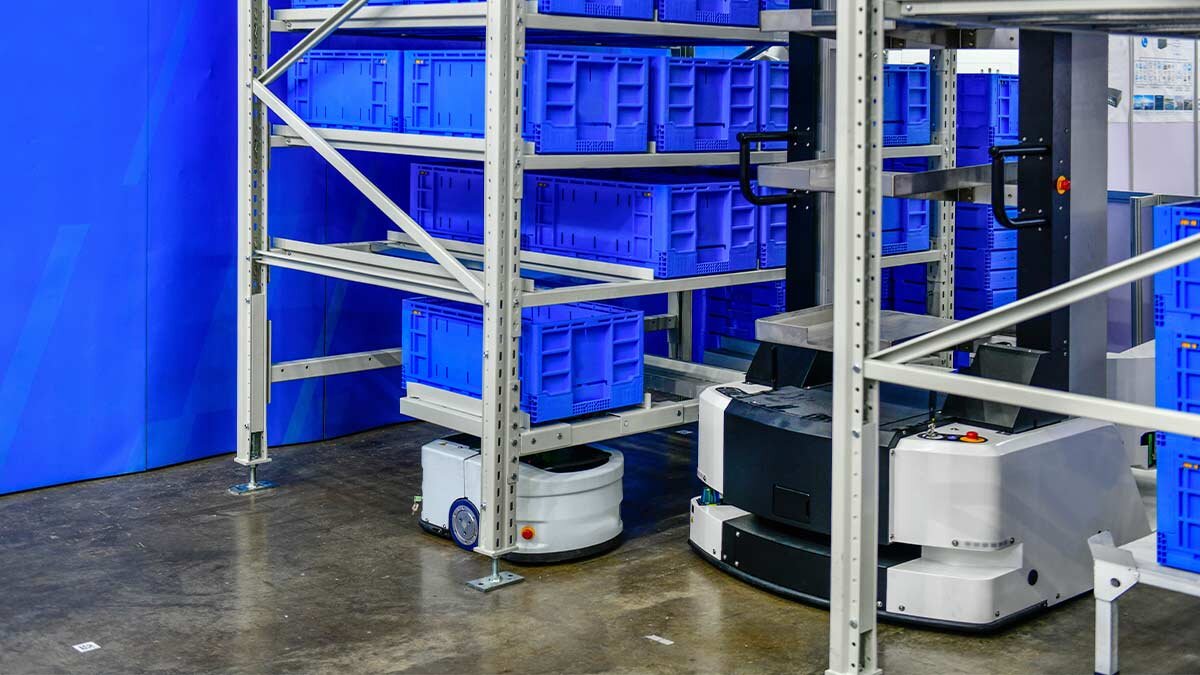
Autonomous Mobile Robots ASRS 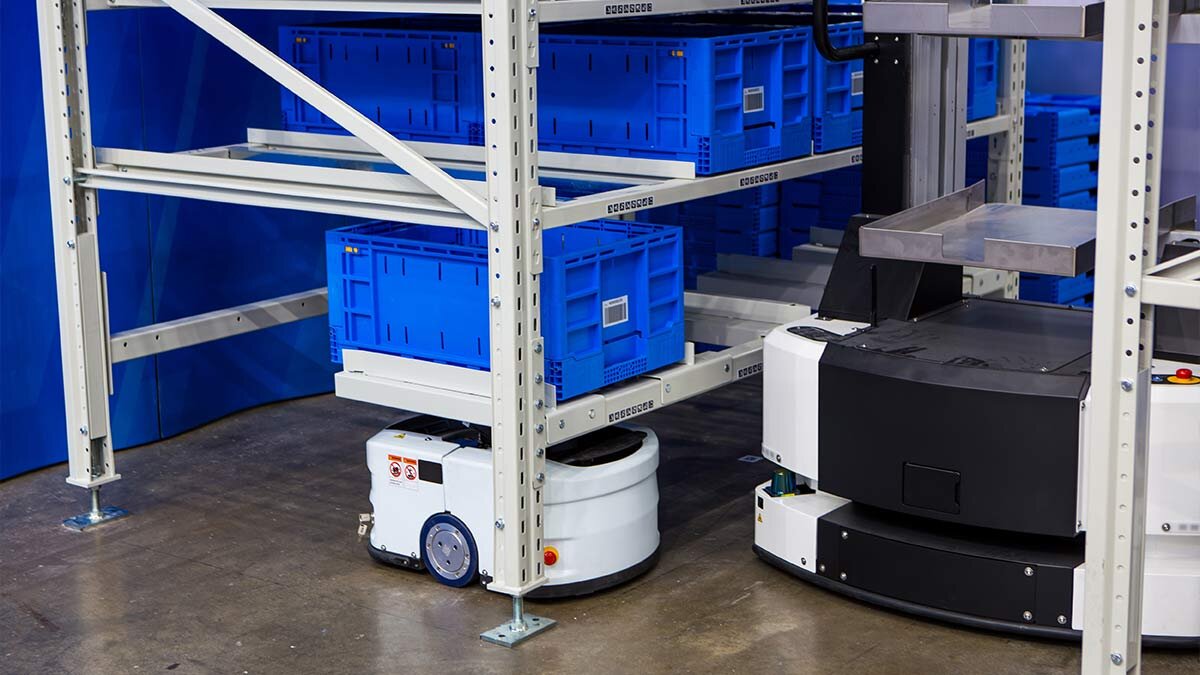 | Mobile robots that move totes, cartons, or pallets between work areas and storage locations. |
What an ASRS Can Do for Your Operation
The benefits of an ASRS begin with solving a specific problem. If floor space is at a premium, high-density storage takes advantage of unused vertical space. If you want to minimize time spent walking the floor and searching shelves, automated picking brings components, maintenance supplies, and finished goods directly to the operators. If you want to improve inventory visibility, digital transaction records give you an up-to-date count of what's on hand, as long as transactions are recorded accurately.
There is a safety benefit, too. An ASRS can reduce repetitive lifting, high-reach work, and tasks near vehicle traffic. The system works best with training, procedures, and equipment safeguards.
For a mid-size plant, these benefits can support parts replenishment, order processing, and buffer stock when demand is high. People still handle exceptions, maintenance, quality checks, replenishment planning, and system oversight. The ASRS takes care of the searching, lifting, and carrying.
Is It Time to Consider One?
It’s not necessary to run a large distribution center to consider automation. Watch for problems that are expensive, hard to scale, or disrupt production and customer service. Are there recurring picking errors, crowded aisles, long travel distances, trouble staffing repetitive storage jobs, or inventory records that don't match what's on the shelf?
Other issues that an ASRS can help with include production crews waiting on materials, regular order backlogs, trouble keeping up with seasonal volume, frequent handling of small high-value parts, or a building with plenty of ceiling height but little floor space left.
What to Look at Before Choosing a System
Start with Your Operation
Look at your work before considering a system. Document the dimensions and weights of your materials and SKUs, usage rates, average and peak order lines, putaway and retrieval volume, and the amount of inventory that needs fast access. Take note of any special requirements, such as lot or batch tracking, temperature control, hazardous materials, or oversized loads. This narrows the field to systems that can actually handle your inventory.
Assess Your Building
Your ASRS design can be affected by:
- Ceiling height
- Floor load capacity
- Aisle width
- Fire protection
- Receiving and shipping flow
- Future expansion plans
A Vertical Lift Module (VLM) may work in a spot with little floor area but good vertical clearance. Pallet-based systems often require a different rack, aisle, and conveyor layout.
Plan the Integration
An ASRS needs data to flow between its controls and the systems that manage inventory, orders, and production. Ask how inventory transactions, exceptions, downtime, cybersecurity responsibilities, and manual fallback procedures will be handled.
Before the project goes live, you’ll need to plan for:
- Installation phasing
- Operator training
- Preventive maintenance
- Spare parts
- Support coverage
Budgeting for an ASRS
Costs vary because project scope varies widely. Equipment type, storage capacity, load characteristics, controls, custom engineering, facility modifications, installation, and software integration all affect the price.
Figure out the problem you're trying to solve. Then weigh total project cost against measurable factors, including:
- Storage capacity
- Labor hours
- Error rates
- Material availability
- Throughput
- Projected space needs
- Maintenance needs
A Good Starting Point
Before committing to an automated storage and retrieval system, figure out how materials move through your facility. You need to consider these functions:
- Receiving through storage
- Kitting
- Production support
- Finished-goods staging
- Picking, packing, and shipping
In your analysis, include a realistic mix of normal days, peak periods, and exceptions. With a plan built on real workflow data, automated storage can become a useful part of a larger manufacturing improvement effort.
Frequently Asked Questions
What does ASRS mean in a warehouse?
It stands for Automated Storage and Retrieval System: equipment and controls that automatically place products in storage and pull them for picking, replenishment, production, or shipping.
How is an ASRS different from warehouse management software?
The ASRS is the physical equipment and control system that moves and stores goods. Warehouse management software keeps inventory records, locations, tasks, and order workflows. Most projects connect the two so records update as goods move.
What inventory works well in an ASRS?
It depends on item size, weight, demand frequency, handling needs, storage conditions, and order profile. Pallets, small parts, cartons, totes, and high-value components can each be handled by different system types. A detailed inventory and workflow review will show which ones fit.
Does an ASRS make a warehouse safer?
It can reduce manual travel, high-reach work, and repetitive handling. However, safe operation requires job-specific risk assessments, employee training, machine safeguarding, maintenance procedures, and compliance with applicable regulations.
Final Thoughts
An ASRS isn't just for large distribution centers. For mid-size manufacturers, the right system can reclaim floor space, reduce walking and searching, improve inventory accuracy, and solve problems that matter to your business.
Product Compliance and Suitability
The statements contained in this guide are intended for general informational purposes only. Such statements do not constitute a product recommendation or representation as to the appropriateness, accuracy, completeness, correctness, or currentness of the information provided. Information provided in this guide does not replace the use by you of any manufacturer instructions, technical product manual, or other professional resource or adviser available to you. Always read, understand, and follow all manufacturer instructions. Portions of this article were generated in part by ChatGPT, and edited by a member of the Zoro team.
Sources:
https://www.autostoresystem.com/insights/automated-storage-and-retrieval-systems-from-a-z
https://www.kardex.com/en/en-us/blog/automated-storage-and-retrieval-systems-asrs#benefits_of_automated_storage_and_retrieval_systems
https://automation.honeywell.com/us/en/products/warehouse-automation/solutions-by-technology/asrs-systems
https://www.kardex.com/en-us/blog/types-of-automated-storage-and-retrieval-systems
https://www.dematic.com/en-be/solutions/automated-storage-and-retrieval-systems/?utm_source=chatgpt.com