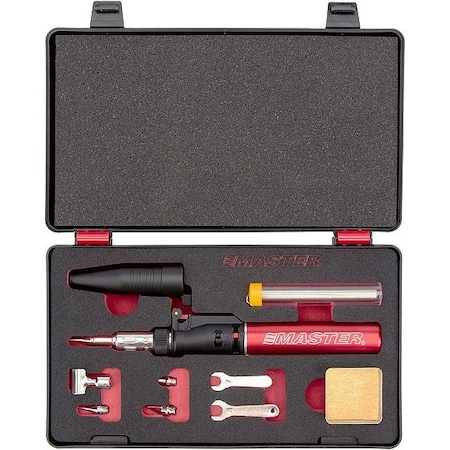
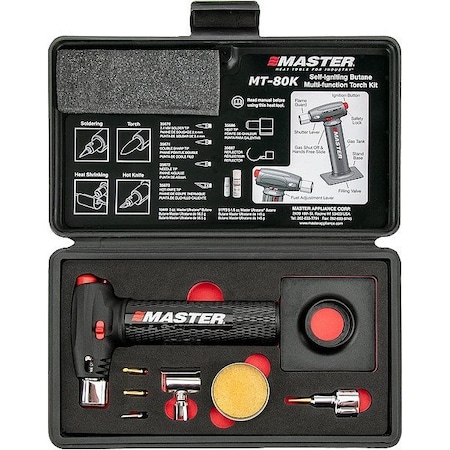
A butane torch is used for brazing which, as far as the practice of joining metals via heat goes, is in between soldering and welding. Butane torches rely on butane gas to fuel an open flame that is used to heat adjacent work pieces as well as the metal filler that is placed between them to form a strong joint. It doesn’t melt the workpiece as welding does, and it provides higher temperatures than can be accomplished in soldering, resulting in a stronger joint. These torches are also used to thaw frozen pipes and shrink tubing. Soldering irons can be powered by AC current or propane gas (AKA gas soldering irons or butane soldering irons), and use solder comprised of a lead/tin alloy to form the bond. They are comprised of a metal tip that heats to between 20 and 60 watts, and an insulated handle. Soldering irons are frequently used in the installation or repair of wiring, circuitry and other electronics connection applications. For more on cutting, joining and connecting metals and other substances through the use of heat , see our torch and torch kits, cutting torches, and thermoplastic welders.
Frequently Asked Questions
Butane torches prioritize safety. They feature an adjustable flame control for precise heat output, an ergonomic handle for comfortable and secure grip, and auto-ignition for hassle-free and reliable operation.
Butane torches excel in various applications such as plumbing, electrical work, jewelry making, culinary arts, and DIY projects. Their versatility makes them indispensable tools for professionals and hobbyists alike.
To ensure optimal performance and longevity, regularly clean the nozzle with a soft brush to remove any debris. After use, allow the torch to cool down completely before storing it in a safe and dry location.
Safety first! Always wear appropriate safety gear, including gloves and eye protection. Ensure adequate ventilation in the workspace to prevent gas accumulation. Never point the torch towards yourself or others, and keep it away from flammable materials.