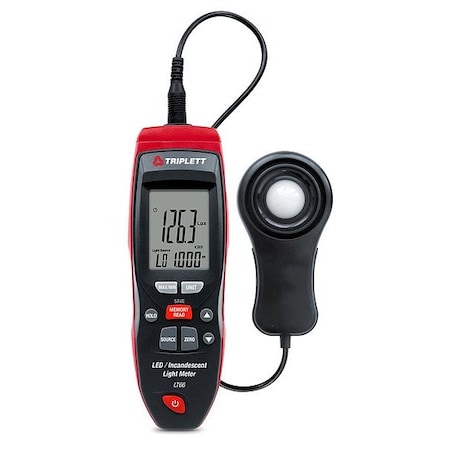
Light meters are deployed not only by photographers and lighting directors, but within applications in the fields of manufacturing, agriculture, public safety, workplace safety, education, research and more. Within each field, there are lighting levels that are considered optimal for peak yield, productivity, efficiency and safety. Be sure you're shining the right amount of light on your systems and processes, and measure other aspects of your operations with our wide selection of our test & measurement products.
Frequently Asked Questions
Light meters, also known as lux meters, measure the intensity of light. They are essential tools for photographers, videographers, and anyone who works with lighting. By accurately measuring the amount of light present, light meters help ensure proper exposure and color balance in images and videos.
Light meters use a photodetector to convert light energy into an electrical signal. The electrical signal is then processed and displayed as a lux value or foot-candle value. Some light meters also have features such as spot metering, which allows for precise measurement of light in a specific area of a scene.
There are two main types of light meters: digital and analog. Digital light meters are more accurate and easier to use than analog light meters. They also offer a wider range of features, such as spot metering and the ability to store readings. Analog light meters, on the other hand, are less expensive and more durable than digital light meters.
When choosing a light meter, consider the following factors: the type of photography or videography you do, the accuracy you need, and the features you want. If you need a highly accurate and feature-rich light meter, a digital light meter is a good choice. If you need a reliable and durable light meter, an analog light meter is a good option.